Posted by: kurtsh | March 9, 2016

BETA: Windows Defender Advanced Threat Protection

At the RSA Conference, we announced a new service designed to proactively monitor your machines for intrusions & threats.

imageTo help protect our enterprise customers, we are developing Windows Defender Advanced Threat Protection, a new service that will help enterprises to detect, investigate, and respond to advanced attacks on their networks. Building on the existing security defenses Windows 10 offers today, Windows Defender Advanced Threat Protection provides a new post-breach layer of protection to the Windows 10 security stack. With a combination of client technology built into Windows 10 and a robust cloud service, it will help detect threats that have made it past other defenses, provide enterprises with information to investigate the breach across endpoints, and offer response recommendations.

Here’s a video explaining the goals of Windows Defender Advanced Threat Protection:

Announcing Windows Defender Advanced Threat Protection

For more details on the new features of the upcoming Windows Defender Advanced Threat Protection service, read the rest of the announcement here:

Posted by: kurtsh | March 9, 2016

BETA: Azure Container Service Preview

Interested in Docker Containers?  So are we!  Container support is being built into Windows Server 2016 but Microsoft’s first support for it is in Azure, by way of the Azure Container Service.

imageIn today’s cloud-first world, businesses increasingly rely on applications to fuel innovation and productivity. We are seeing more and more technologies that are specifically designed for the cloud to take advantage of the associated flexibility and scalability it allows. Containers are emerging as an attractive way for developers to quickly and efficiently build and deploy these “born in the cloud” applications.

This week, Microsoft announced the Azure Container Service preview to help customers deploy and manage containers using their favorite tools. Azure Container Service optimizes the configuration of popular open source tools and technologies specifically for Azure, delivering an open solution that offers portability for both your containers and your application configuration. You select the size, the number of hosts, and choice of orchestrator tools, and Container Service handles everything else.

Read the announcement here:

Posted by: kurtsh | March 9, 2016

BETA: Azure Stack Technical Preview

If you’re looking to stand up not just a Virtual Machine farm, but a REAL Private Cloud driven by elasticity & self-service, check out Microsoft’s new Azure Stack.

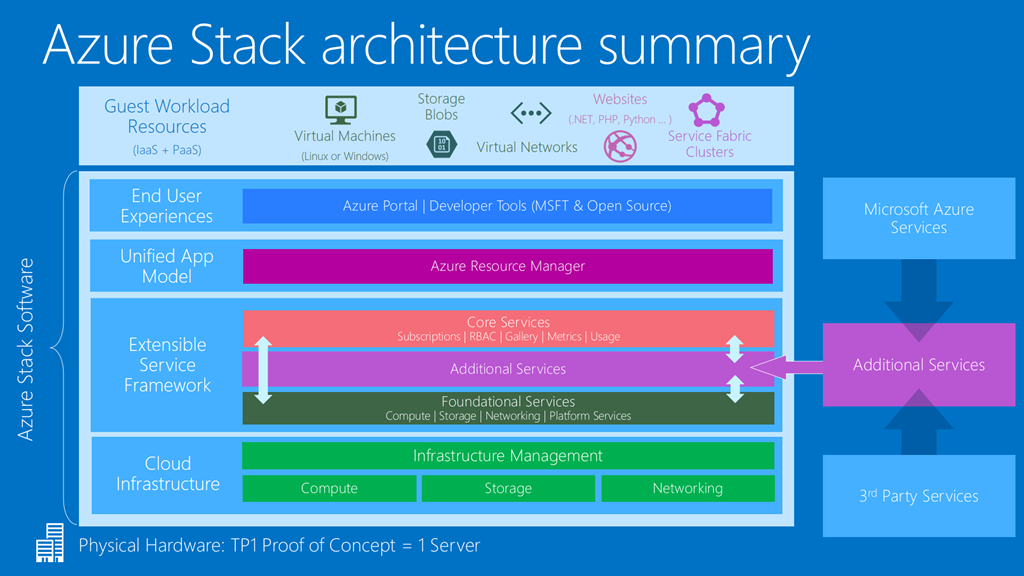
imageThe first Technical Preview of Microsoft Azure Stack, the only hybrid cloud platform that is consistent with a leading public cloud, is live today. Born from Azure, Azure Stack helps organizations deliver Azure services from their own datacenters.

With Azure Stack, organizations can embrace hybrid cloud computing on their terms by helping them address business and technical considerations like regulation, data sovereignty, customization and latency. Azure Stack enables that by giving businesses the freedom to decide where applications and workloads reside without being constrained by technology.

“Just like Azure, Azure Stack is a comprehensive platform for hosting modern business applications.  Azure and Azure Stack have a standardized architecture, including the same portal, a unified application model, and common DevOps tools,”  wrote Microsoft’s Mike Neil, Corporate Vice President of Enterprise Cloud. “The application model is based on Azure Resource Manager, which enables developers to take the same declarative approach to applications, regardless of whether they run on Azure or Azure Stack. Tooling-wise, developers can use Visual Studio, PowerShell, as well as other open-source DevOps tools thereby enabling the same end user experiences as in Azure.”

Here’s an early look at Azure Stack from Jeffery Snover, father of Powershell:

An early look at Azure Stack and what it means for IT, with Jeffrey Snover

Read more of the announcement here:

Visit the Azure Stack web site here:

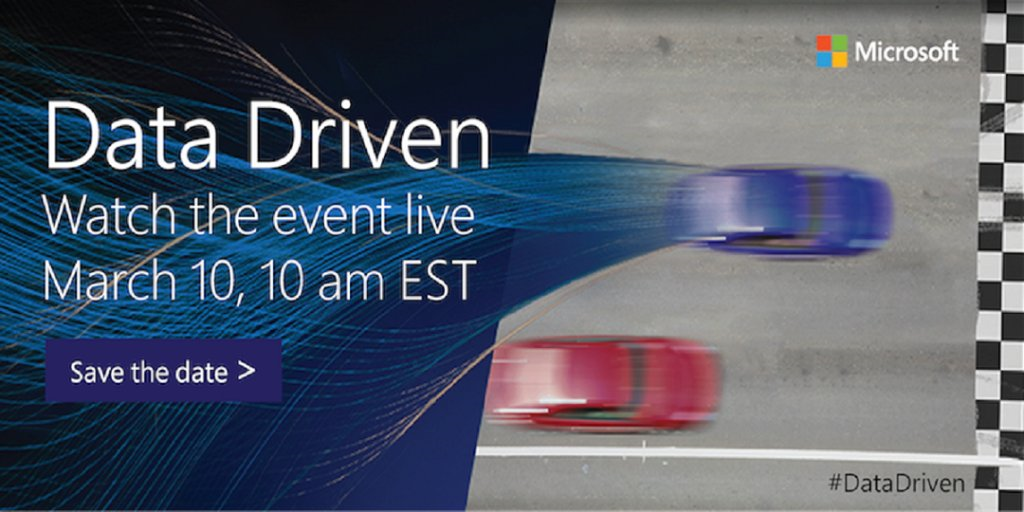
imageJoin our virtual event to hear Microsoft CEO Satya Nadella and customers share how data insights are driving business transformation.

Microsoft leaders will also share how customers are embracing data to drive innovation and why SQL Server 2016 has become the industry leader.

Watch it live | March 10, 2016, 10AM-Noon EST

imageAttend this FREE Microsoft Office 365 webinar to understand what training resources are available and discover new ways to foster adoption.

A live presenter will encourage questions and discussion of scenarios specific to you.

DATE/TIME:

REGISTRATION:
http://aka.ms/O365buildawareness!

DISCUSSION:
Read more on the Yammer thread for this event:
https://www.yammer.com/itpronetwork/#/Threads/show?threadId=657738057

Posted by: kurtsh | March 8, 2016

TRAINING: Office 365 for Business Training

imageOffice 365 for business refers to Office 365 plans that are designed for organizations. As a business user, you can access the Office applications across your devices, and you get online file storage and sharing.

If you’re the purchaser for your organization, you can choose from different plans where the applications and services vary according to what your organization needs.

Tip  If you’re looking for training for Outlook, Word, Excel, PowerPoint, OneNote, and other Office apps, visit the Office Training Center

Help and training for Office 365 administrators

Training for everyone

See Also

Office 365 Home training

———–

[taken from https://support.office.com/en-us/article/Office-365-for-business-training-e990f8ff-56d7-450e-ad9f-74ae8718ef09?ui=en-US&rs=en-US&ad=US]

Posted by: kurtsh | March 7, 2016

NEWS: Microsoft announces SQL Server on Linux

Hot off the presses!

imageToday I’m excited to announce our plans to bring SQL Server to Linux as well. This will enable SQL Server to deliver a consistent data platform across Windows Server and Linux, as well as on-premises and cloud. We are bringing the core relational database capabilities to preview today, and are targeting availability in mid-2017.

SQL Server on Linux will provide customers with even more flexibility in their data solution. One with mission-critical performance, industry-leading TCO, best-in-class security, and hybrid cloud innovations – like Stretch Database which lets customers access their data on-premises and in the cloud whenever they want at low cost – all built in.

Read more from the announcement here:

Posted by: kurtsh | March 7, 2016

BETA: Azure Active Directory Identity Protection

AzureLogo

We just announced a new services for folks looking for proactive security around their Azure Active Directory.  Introducing Azure AD Identity Protection.

Azure Active Directory Identity Protection is a security service that provides a consolidated view into risk events and potential vulnerabilities affecting your organization’s identities. Microsoft has been securing cloud-based identities for over a decade, and with Azure AD Identity Protection, Microsoft is making these same protection systems available to enterprise customers. Identity Protection leverages existing Azure AD’s anomaly detection capabilities (available through Azure AD’s Anomalous Activity Reports), and introduces new risk event types that can detect anomalies in real-time.

The vast majority of security breaches take place when attackers gain access to an environment by stealing a user’s identity. Attackers have become increasingly effective at leveraging third party breaches, and using sophisticated phishing attacks. Once an attacker gains access to even a low privileged user account, it is relatively straightforward for them to gain access to important company resources through lateral movement. It is therefore essential to protect all identities and, when an identity is compromised, proactively prevent the compromised identity from being abused.

Discovering compromised identities is no easy task. Fortunately, Identity Protection can help: Identity Protection uses adaptive machine learning algorithms and heuristics to detect anomalies and risk events that may indicate that an identity has been compromised.

Using this data, Identity Protection generates reports and alerts that enables you to investigate these risk events and take appropriate remediation or mitigation action.

But Azure Active Directory Identity Protection more than a monitoring and reporting tool. Based on risk events, Identity Protection calculates a user risk level for each user, enabling you to configure risk-based policies to automatically protect the identities of your organization. These risk-based policies, in addition to other conditional access controls provided by Azure Active Directory and EMS, can automatically block or offer adaptive remediation actions that include password resets and multi-factor authentication enforcement.

For a look at the announcement as well as a breakdown of Azure Active Directory Identity Protection’s capabilities, visit:

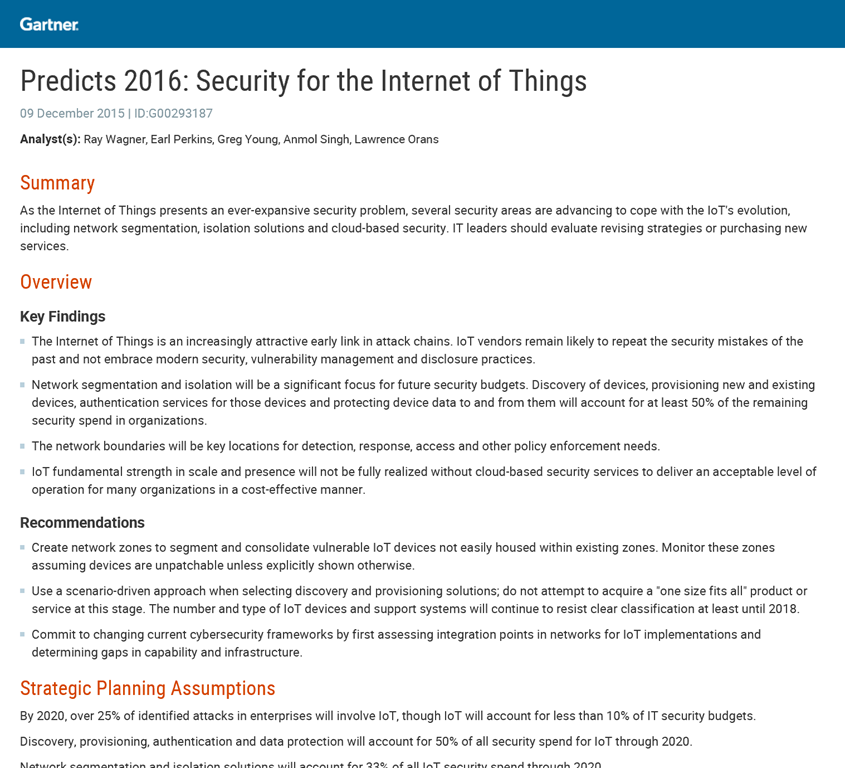
imageAn estimated 75 percent of midsized to large organizations will employ three (or more) Internet of Things (IoT) point solutions through 2020. IT leaders are grappling with the scale, cost, and complexity of new IoT project implementations. IoT project implementers should invest in scalable, innovative approaches to security, integration and architecture.

In this report from Gartner, you’ll learn how to address some common issues associated with IoT implementations, including:

  • How to determine if you can lower costs by augmenting operational systems
  • Why you should plan to utilize three or more IoT platforms to address diverse IoT device ecosystems and IoT platform functionality requirements
  • The benefits of adopting an “API first” approach to IoT integration (versus “API only”)
  • Reasons why you should use cloud-based security services as an alternative to gateway-centric solutions

Grab the report at no cost here:

image

In the past few years, hacker activity has become so commonplace that headlines announcing new data breaches garner a fraction of the attention they did only a few years ago. It’s a trend that shows no sign of reversing—directed attacks and data breaches increased by 40% from 2013 to 2014.

Despite the constant barrage of attacks, many businesses still rely on the same safeguards they were using a decade ago. It’s time to take a hard look at what businesses are doing to keep their data safe, and how we can do better.

Does your business rely on outdated security to protect data, devices, and employees? Have you taken the basic precautions that can prevent or mitigate an attack? Are you taking advantage of modern day offerings to create a more secure data environment?

To bring your online security into the 21st century, we created The Modern Workplace Watchdog. It’s a manual for addressing the most common security problems businesses experience. In the eBook, you will find practical information you can use today to protect your business in the years ahead.

Read The Modern Workplace Watchdog to learn:

  • The four basic security lapses hackers target the most
  • How to easily secure a BYOD (Bring Your Own Device) workplace
  • How to move beyond defense to take a holistic approach to cybersecurity
  • Simple steps you can take today to secure your IT environment

Hackers are always evolving. Your business’s security needs to evolve as well.  The Modern Workplace Watchdog will show you how.

« Newer Posts - Older Posts »

Categories