Posted by: kurtsh | May 8, 2020

INFO: PowerBI Feature Availability in GCC

imageTo accommodate the requirements of government cloud customers, there are some differences between government plans and commercial plans. Refer to the following table to see which features are available in each government environment.
  • Usage metrics for reports and dashboards
  • Azure B2B between GCC and commercial cloud
  • Paginated reports

Please review this link for up to date information on what’s available in the GCC implementation vs Commercial implementation of Power BI.

imageDid you ever want to hide the email addresses of individuals that you invite to a meeting… like a Teams Meeting?

This is a common scenario coming up with meetings involving citizens and public officials. For example, you might not want to expose the email address of a judge of an attorney in the invite of a Teams meeting.

A BCC: field does not exist in appointments/meetings like there is in Outlook for Desktop emails and if you’d like to request such a feature, (there’s a lot of votes for it), check out the Outlook for Desktop UserVoice – go to this link to vote for it.

RESOURCE FIELD:
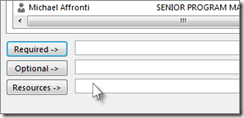
There is however a well-documented workaround involving the usage of the Resources field.  It’s not obvious but it is well documented in the link below so check it out. tl;dr: Before you send a meeting invite:

  1. Open a meeting request – go to Scheduling Assistant – Add Attendees
  2. Do one of the following:
        1. Click the Resources field and add the attendees you want to hide
        2. OR… select the dropdown list next to each name already in the invite list and choose “Resource (Room of Equipment)”

Note:  This will be the attendees name in the location field of the meeting request.  You can change or erase the location field after if you choose.

For more details, see below.

(Re: Outlook Web Access… Unfortunately, no such feature exists in Outlook Web Access.  If you want to request this, go to this link on UserVoice for Outlook Web Access.)

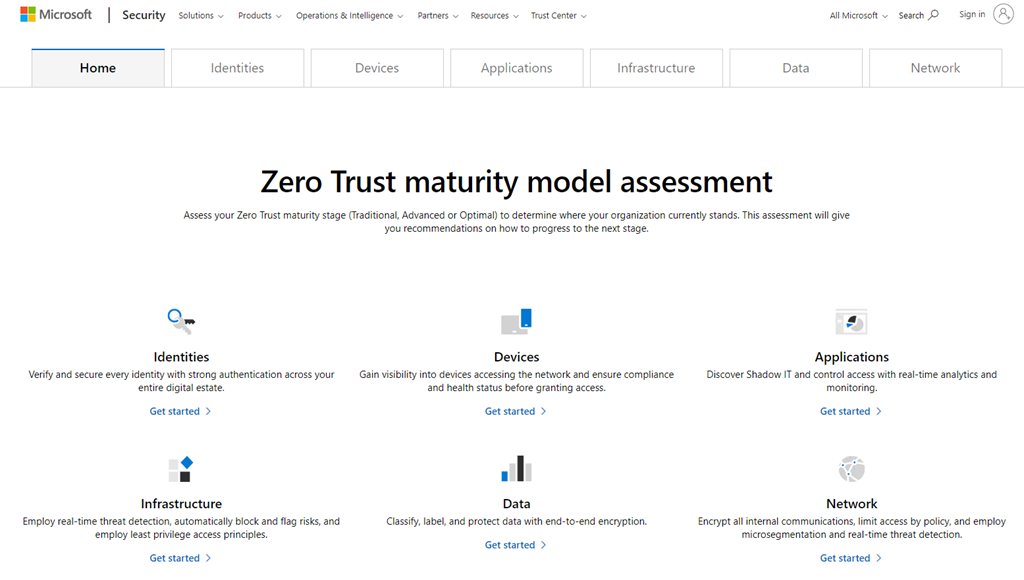
Many organizations are turning to the Zero Trust framework to better support remote work and manage risk.

Try our assessment tool to help determine where you are in your journey.

imageWith such a large influx of employees working remotely, many of the traditional network-based security controls are unable to protect the organization. For many organizations, there are two options: route all remote traffic through a strained legacy network architecture, resulting in poor performance and user productivity; or relax restrictions and risk losing protection, control, and visibility. Many organizations are turning to Zero Trust security framework to better support remote work and manage risk.

The Zero Trust security framework helps organizations effectively meet these challenges by gating access to resources individually using granular access policies that take advantage of dynamic user and device risk signals and other telemetry to make more adaptive access decisions.

Support for your Zero Trust journey

Getting started on your Zero Trust journey can be daunting, but we’re here to help. We’ve created the Microsoft Zero Trust Assessment tool to help you determine where you are in your Zero Trust journey. Our assessment tool will help you assess your readiness across identities, devices, apps, infrastructure, network and data, and then provide go-dos and deployment guidance to help you reach key milestones.

WHITEPAPER:
We recently published Microsoft Zero Trust Maturity Model vision paper detailing the core principles of Zero Trust, along with our maturity model, which breaks down the top level requirements across each of the six foundational elements.

Read the announcement here:

Posted by: kurtsh | May 4, 2020

DOWNLOAD: eBook, “Azure for Architects”

imageDesign your cloud solutions with high availability, security, and scalability

Base your cloud solutions on strategy and architecture that meets the needs of your organization. In the Azure for Architects e-book from Packt Publishing, you’ll find simplified guidance for everything from understanding core services to delivering advanced solutions. Explore topics including:

  • Common design patterns, principles, and best practices for working in Azure.
  • Designing for high availability, performance, scale, and resilience, and making informed decisions about deployment strategies.
  • Core Azure services as well as advanced solutions that use the Internet of Things, serverless computing, DevOps, and data services.
  • Cost management, security, and monitoring to ensure your solutions meet business requirements.

Take a structured approach to your development and create solutions faster with the foundation provided in this exclusive e-book, free from Microsoft.

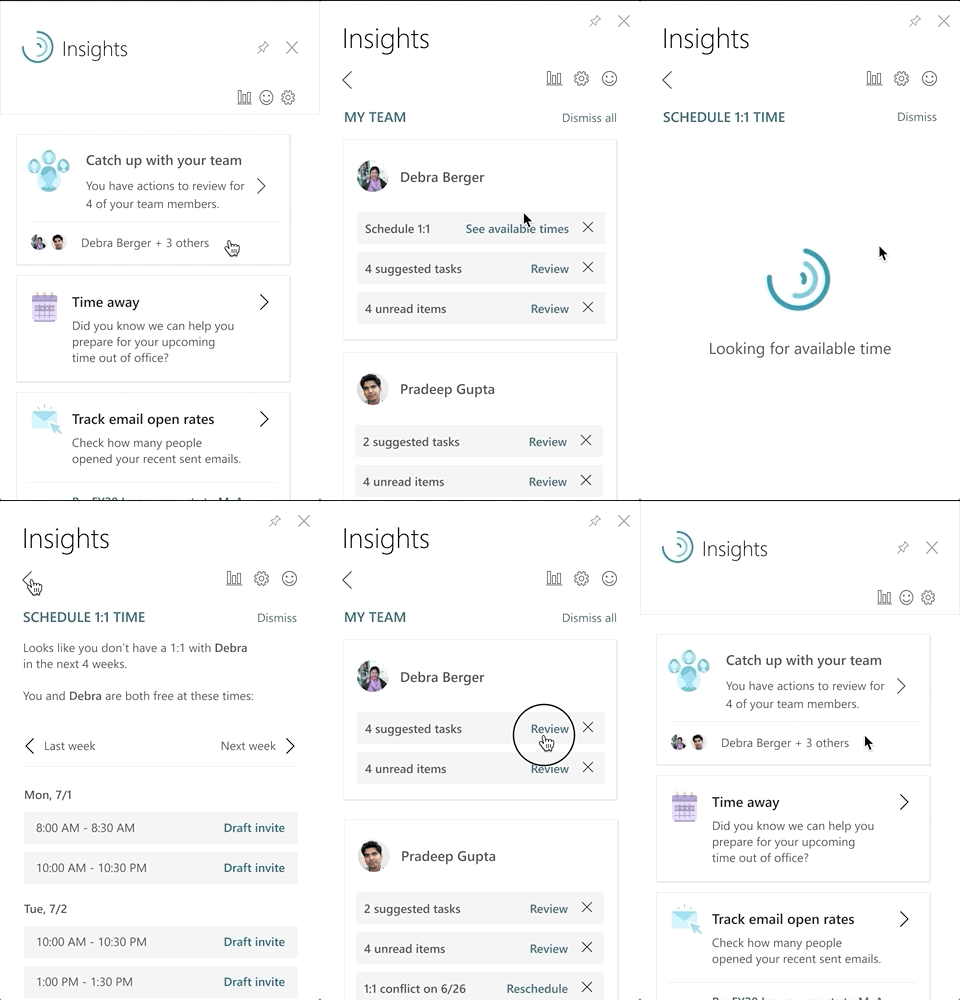
Starting this week, people managers with a MyAnalytics license will be able to use the Insights Outlook add-in to stay connected with team members, with reminders to reschedule 1:1s if conflicts arise, follow up on an important requests, and more. This feature will roll out over the next several weeks.

manager-gif.gif

FAQ

  • Do managers see any insights on team members’ behaviors that wouldn’t otherwise be available?
    No. Assistance for managers in MyAnalytics relies on information from the manager’s own mailbox; managers do not receive any incremental information from team members’ mailboxes. For example: a manager can use this feature to review important unread emails in their inbox from team members, but they cannot see whether a specific team member has read an email that they sent.
  • How are managers and team members identified?
    MyAnalytics determines who is a manager and who is on their team using Azure Active Directory. A user must have team members listed in Azure AD in order to access this feature in the Insights add-in. Note that managers have the ability to add or remove team members in MyAnalytics in case any information is out of date (these changes are stored locally for use in MyAnalytics and not synced back to Azure AD).

More information is available on this page: https://docs.microsoft.com/en-us/workplace-analytics/myanalytics/overview/privacy-guide#assistance-f…

imageRecently, we made remote collaboration easier by enabling users to join Live Share sessions from their browser.

We’ve got 3 major changes:

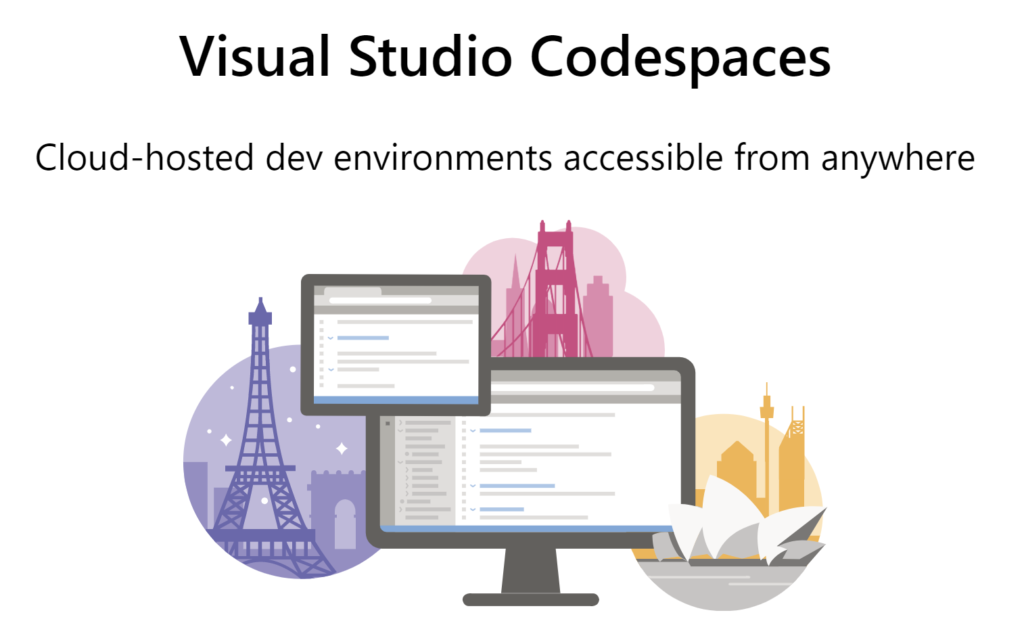
Today, we’re renaming Visual Studio Online to Visual Studio Codespaces. (It’s true what they say, naming is hard! ) Do you want a great experience working on your long-term project? Do it in a Codespace. Need to quickly prototype a new feature or perform some short-term tasks (like reviewing pull requests)? Create a Codespace! Your Codespaces are simply the most productive space to code.

Additionally we’ve dropped our prices/rate by as much as 66%.  And we’re introducing a Basic instance type that comes with two virtual cores, four GB RAM, and 64 GB of SSD storage for a low $0.08/hr.

Read more at the announcement post:

Starting June 1, Microsoft will be enhancing the described Microsoft 365 security products with Microsoft Threat Protection features when an eligible customer visits the Microsoft 365 security center.

Microsoft Threat Protection enables coordinated defenses across email, endpoints, identities, and applications. It orchestrates defenses to detect, block, and prevent sophisticated attacks and automatically heal affected assets.

image

With Microsoft Threat Protection, you get:

  • Correlation of security data and alerts across all Microsoft 365 security products into cross-product incidents. 
  • Automated self-healing for endpoint, mailbox and identities affected by security incidents. 
  • Centralized data store that enables proactive threat hunting capabilities and behavior-based custom detection rules over email, endpoints and identity data.

This change will apply to customers with corresponding licenses for one of the following Microsoft 365 security products:

  • Microsoft Threat Protection
  • Microsoft Defender Advanced Threat Protection
  • Office 365 Advanced Threat Protection
  • Microsoft Cloud App Security
  • Azure Advanced Threat Protection

This also applies to customers with one of the following licenses by June 1, 2020:

  • Microsoft 365 E5
  • Microsoft 365 E5 Security
  • Windows 10 Enterprise E5
  • Enterprise Mobility + Security (EMS) E5
  • Office 365 E5
  • Microsoft Defender Advanced Threat Protection
  • Azure Advanced Threat Protection
  • Microsoft Cloud App Security
  • Office 365 Advanced Threat Protection (Plan 2)

Read the announcement blog here:

imageFor 13 consecutive years, Gartner has recognized Microsoft as a Magic Quadrant Leader in analytics and business intelligence platforms.

In this report, we believe, you’ll learn about Gartner’s assessment of the features and capabilities that differentiate the various products in this market.

Learn how a comprehensive product vision, positive sales experience, and intuitive user experience contributed to high levels of customer satisfaction and helped position Microsoft as a Magic Quadrant Leader among analytics and business intelligence platforms.

Posted by: kurtsh | May 4, 2020

OFFER: Microsoft 365 Developer Program

image[This is one of my favorite secrets at Microsoft that no one seems to know about]

Let’s say you were a business user and were interested in low-code, no-code app development to make you more productive and skilled as a working professional.

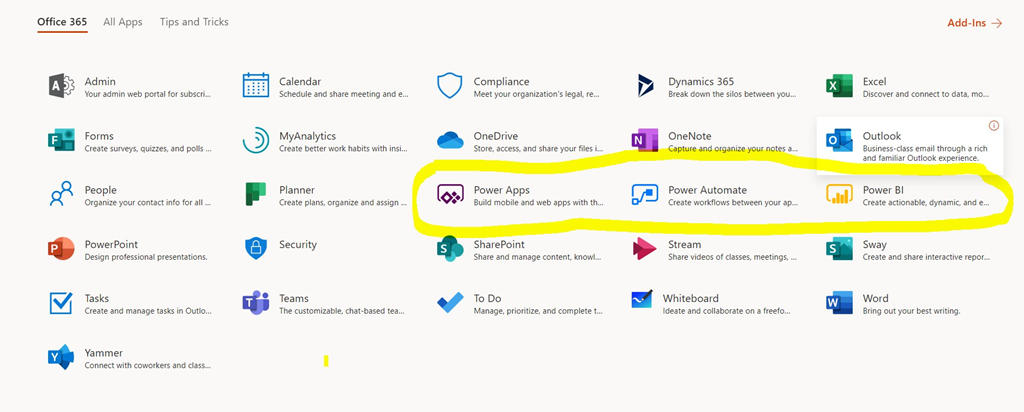
You want to try out the Power Platform but don’t have a Office 365 Enterprise/Education/Government subscription.

No problem!

imageMicrosoft 365 Developer Program
Now you can get a FREE Microsoft 365 Developer Sandbox. Again, this is a free, renewable 90-day Microsoft 365 E5 developer subscription that entitles you to:

  • 25 user licenses for development purposes
  • All Microsoft 365 workloads and capabilities (Windows not included) including:
    • All Microsoft 365 services including SharePoint Online, OneDrive for Business, Outlook/Exchange Online, Microsoft Teams, Planner, and the Office 365 ProPlus suite (Word, Excel, PowerPoint, etc.)
    • Office 365 Advanced Threat Protection P2
    • Advanced Analytics with Power BI
    • Enterprise Mobility + Security Suite E5 (Yes, E5)
    • Azure Active Directory Premium P2 (Yes, P2)
    • PowerApps & Power BI

Interested?  Visit:

If you’re an Administrator, you can get support by opening support tickets through the Administration Console for Microsoft 365 or Azure

Service Level Agreements (or support scope) for Microsoft Professional Support calls/tickets depends on the type of call/ticket originated:

Note: The support services references above come with your subscription to either service and is not a replacement for Microsoft Premier Services. Premier Support Services has a much higher Service Level Agreement, provides oversight and escalation, and a higher caliber of support engineering. If you have Premier Support Services, you should virtually always use your Premier contract for support.

————-

Microsoft 365 and Office 365 Support Description
https://docs.microsoft.com/en-us/office365/servicedescriptions/office-365-platform-service-description/support

« Newer Posts - Older Posts »

Categories