[Note:  4K sector drives are not a new thing however what IS new is that OEMs are starting to ship them in enterprise class systems and unbeknownst to some IT folk, these drives are not supported with older operating systems.]

imageOEMs have started shipping HDDs with 4K sectors. Windows Server 2003, Windows Server 2003 R2, or Windows XP are not supported on HDDs with 4K sectors.  If the HDD you receive has 4K sectors and you install one of these older versions of Windows on it, you will have an unsupported configuration.  http://support.microsoft.com/kb/2510009

For Windows 7 and Windows 2008 Server R2, Microsoft only supports the hardware 512 emulated mode 512e.

Support for Hard Disk Formats based on OS Version

Common Name(s)

Physical sector size

Logical sector size

Windows Version with Support

Legacy 512 Native, 512 Native, Legacy

512 bytes

512 bytes

All Windows versions

Advanced Format, 512-bye Emulation, 512e, 4k/512e

4 KB

512 bytes

Windows 7 with MS KB 982018
Windows 7 SP1
Windows Server 2008 R2 with MS KB 982018
Windows Server 2008 R2 SP1

4K Native, 4k/4k

4 KB

4 KB

Not supported as of Windows 7 SP1 or Windows Server 2008 R2 SP1. Microsoft is conducting an investigation into the feasibility of supporting these kinds of disks in the future and will issue the necessary KB articles when it is appropriate.

Other

Not 4 KB or 512 bytes.

Not 4 KB or 512 bytes.

Not supported

Microsoft released an update to several SDP Diagnostic Packages adding support to detect Advance Format Disks.

This KB also links to a hotfix that resolves a list of the known issues related with these disks on Windows 7 and Windows Server 2008 R2. http://support.microsoft.com/kb/982018

Some of the OEMs are using the same part numbers as the HDDs with 512 byte sectors, so please keep that in mind when you are spec’ing out your hardware.

clip_image002(This is not a recommendation.  It’s just what I did.  Caveat installer.)

I upgraded my Samsung Series 9 to 8GB of RAM.  It was pretty easy and took no more than 15 minutes with the right parts, and the knowledge that I was nuking my warranty since Samsung doesn’t support RAM upgrades on this laptop, despite the fact that the unit supports a max of 8GB but only comes with 4GB stock. 

PREPARATION:
Here’s what I used:

  1. Electronics-grade Philips head screwdriver
  2. A single 4GB PC3 8500 DDR3 SODIMM ($29)
  3. A willingness to invalidate my warranty

The casing was relatively easy to pry off once you realize that there are no fewer than TEN SCREWS holding the back metal plate in place.  These 10 screws include:

  1. 3 exposed screws near the front
  2. 4 screws at the sides of the port trays, hidden by small rubber circles
  3. 2 screws hidden under the larger rubber “feet” near the rear
  4. 1 screw hidden under the tiny rubber foot in the middle rear

…the case comes off after a little prying with a flathead screwdriver. 

clip_image003

INSIDE THE CHASSIS
Inside, there’s a curious sight:

  1. There are two slots for memory DIMMS.  The Series 9, instead of having two 2GB DIMMs – one in each slot – it has a single 4GB DIMM in slot 0.
  2. There is an actual STICKER covering slot 1, providing instructions on how to install the second DIMM into the remaining slot.  (How nice of them.)

clip_image005I removed and read the sticker, and it explicitly shows that one needs to disconnect the power from the motherboard before installing the new memory purchased into slot 1.  The power is a 9 wire cable that is just below the empty memory slot. 

(The sticker that was attached to the empty slot is shown above along with the 4GB DDR3 DIMM I purchased from http://www.edgetechcorp.com/ram/Samsung/Samsung-Series-9-Notebooks/NP900X3A-(NP900X3A%252dA01US)-Memory for $28.  They delivered in 2 days and explicitly state that this memory is guaranteed to work on the Samsung Series 9.)  The location of the power cable is circled in RED to the right.

Once I disconnected the power, I inserted the DIMM firmly at an angle then locked it into place by gently pushing it down against the motherboard, then reconnected the power.  

Once I reattached the cover and boot up, I found that the machine automatically detects the new memory and Windows finds 8GB of RAM available.

I asked my coworker, Michael Ghekiere, the question, “How can I find a specific folder in Outlook?” and this is what he gave me as a solution.  Pretty cool out of the box thinking.

I have a massive folder hierarchy within Outlook/Exchange and I’d accidentally dragged and dropped a folder from somewhere in the hierarchy to somewhere else and I couldn’t figure out where the folder got placed in my Mailbox hierarchy.  Surely you’ve had the same issue where you accidentally “lost a folder” somewhere when your drag and drop failed.

imageIt turns out that Outlook’s search will not work for “folder names” but it will work for mail items.  If you know the content of at least ONE mail message that exists in the folder that you lost, then you can search for that email WITHIN OUTLOOK and it will tell you in the mail object’s properties what folder the email is, but it won’t tell you how to get to that folder from within the hierarchy.

So this is the solution that Michael Ghekiere came up with.  Something to save in the back of your mind.  It involves using Windows Search to find the folder instead of using Outlook’s search:

  1. Try the search from Windows 7’s search pane.  Search in the START menu for a message you know is in the folder you lost.
  2. Right-click on the message, click “Show Conversation”
  3. Browser window appears. Select the message in the window.
  4. In the bottom pane of the explorer will be some message properties, including a full folder path. Hover over that path.  There you go!

image

Posted by: kurtsh | June 20, 2011

INFO: Samsung Series 9 ultrathin Windows 7 laptop

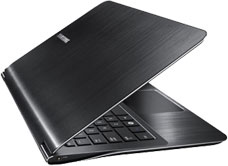
imageI love my new Samsung Series 9.  This is the first ultraportable laptop that I’ve ever used that TRUMPED my previous full-sized laptop.

The biggest difference (besides the obvious size/look & feel differential) is the switch from Core2Duo to Core i5 w/ Sandy Bridge architecture.  The performance on this thing is stunning.

I created the following table from a variety of sources to compare it to “the other guys”.

Attribute

Samsung Series 9

Apple MacBook Air

Processor Core i5 2537M 1.40GHz, 3MB cache w/SpeedBoost to 2.3Ghz (Sandy Bridge) Core2Duo 1.86Ghz (optional Core2Duo 2.13Ghz with 6MB cache)
Memory 4GB DDR3 1066
(8GB RAM max)
2GB DDR3
(4GB RAM max)
Dimensions .64” thick .68” thick
Screen size 13.3”Active Matrix TFT 13.3”
Display technology LED-backlit 400NIT SuperBright Plus LED-backlit
Resolution 1366×768 1440×900
GPU Integrated Intel HD 3000 GPU nVidia GeForce 320M (256MB) GPU
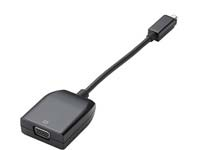
External Display Port Mini-HDMI
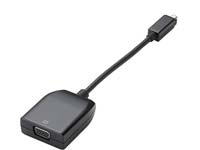
(w/Mini-HDMI-to-VGA dongle)
Mini-DisplayPort
Wireless Display Yes (Intel Widi) No
Front facing camera Yes (1.3Mp) Yes (1.3Mp)
Storage 128GB SSD 128GB flash storage(optional 256GB)
Keyboard Backlit+Matte finish Non-backlit+Glossy finish
Pointing Device ClickPad (Multi-touch gesture) Trackpad (Multi-touch gesture)
Speaker 3 watt (1.5Wx2) stereo speakers + 1.5 watt subwoofer Stereo speakers
Audio ports Headphone+Microphone Headphone only
Ethernet Built-in Gigabit Add-on 100Mb USB adapter
WiFi 802.11 b/g/n 802.11a/b/g
Expansion MicroSD slot SD slot
TPM TPM 1.2 (A02US only; not A03US) No TPM available
Bluetooth 3.0 2.1
USB 3.0 2.0
WiMax Yes No
Battery
(Company reported)
LiPoly 7hrs LiPoly 7hrs
Battery
(3rd party tested)
5hrs 22min (CNet) 4hrs 58min (CNet)
Weight 2.89lbs 2.9lbs
Warranty 3 years, all-inclusive warranty.  International parts & labor parts & labor; 3 years technical phone support 90 days phone support + 1 year limited hardware warranty.  Similar 2 year US-only protection available through AppleCare for $250
Price $1,599 + free Xbox 360 4GB $1,299 (requires $1,599 for 256GB)


Other noticeable differences:

  • TEMPERATURE
    Runs cool… even when SpeedBoosting!  Not gonna burn your lap… unlike the MacBook Air which may leave a scorch mark on a wooden boardroom table.
  • CHASSIS
    The laptop is encased in “Duralumin”, a metal composite used to build jet airliners for it’s strength & lightweight.  It is of very sturdy construction as a result.
  • NETWORK PERFORMANCE
    The Series 9 has a native, integrated gigabit network adapter with actual performance of up to 1Gb/sec data transmission rates due to its integration with the PCI-E bus.  The Macbook Air’s lesser 100Mbps network adapter is a USB adapter that not only takes up a USB slot, but is relegated to USB data channel performance.
  • SALES TAX
    An interesting thing about the Samsung is that you can buy it out of state and avoid paying sales tax.  For example:  In CA, you can pick up the Samsung from Amazon and be tax free & shipping free.  Not so much with the MacBook Air:  Apple’s likely got a store in your state and if that’s the case, you’re paying sales tax.  This is roughly a $140 premium for really no value.
  • WIRELESS DISPLAY
    Something that no one seems to mention is because the Samsung Series 9 leverages the integrated graphics processor – the HD 3000 – on the Core i5, Intel’s Wireless Display technology or “WiDi” is available to the user.  This allows users of the Series 9 to wirelessly transmit their laptop screen at 1080p full 30fps to their consumer HD TV using a WiDi receiver, requiring no additional hardware on their PC.  Great for video sharing!

A few great links for the Samsung Series 9:

  1. Samsung’s official site for the Series 9 including marketing photos:
    http://www.samsung.com/ca/consumer/office/mobile-computing/performance/NP900X3A-A01CA/index.idx?pagetype=prd_detail&returnurl=
    &pid=ca_mobilecomputingtype_keyvisual1_np900x3a_20110504
  2. TechRepublic’s very excellent hardware tear down of the Series 9:
    http://www.techrepublic.com/blog/itdojo/samsung-series-9-worthy-rival-to-apple-macbook-air/2607
  3. Tej Babra’s look at the Intel WiDi Wireless Display feature of the Series 9:
    http://www.tejbabra.com/index.php/reviews/samsung-series-9-laptop-review-with-intel-widi/
imageAnnouncing Microsoft Virtualization Jump Start Training Videos!

Just after MMS 2011, Microsoft Learning hosted another new and exclusive Jump Start virtual training event – “Microsoft Virtualization for VMware Professionals.” We are thrilled to announce availability of the HD-quality video recordings – FREE – on TechNet Edge, MS Showcase, the Zune Marketplace, iTunes! Additionally, every module will be made available (with assessment questions) on the Microsoft Virtual Academy (MVA) later this month.

Who is the target audience for this training?

  • IT Professionals, Virtualization Engineers, Data Center Managers, IT Decision Makers, Network Administrators, Storage/Infrastructure Administrators & Architects.
  • Microsoft customers and partners currently using VMware.
  • Companies using VMware searching for real-world answers as they consider whether or not Microsoft Virtualization truly fits their needs.

What’s the high-level overview?

  • The 15-hour course is broken into three sections: (1) Platform, (2) Management, and (3) VDI
  • “Team-teaching” approach led by Microsoft partner and virtualization architect, Corey Hynes, and Microsoft Technical Evangelist, Symon Perriman
  • Every module is an engaging discussion, packed with best practices and real-world demonstrations

Where do I go for this great training?
The HD-quality video recordings of this course are on TechNet Edge. If you’re interested in one specific topic, I’ve included links to each module as well.

Where can people learn more?
Clearly, virtualization experts worldwide are taking a new look at Microsoft Virtualization. After this Jump Start, we hope you’ll want to learn why. Check out the Microsoft Learning “Virtualization Training Portal” to better understand virtualization-specific certifications and where to find instructor-led classes to help you and your team. Of course, these videos will also be posted to the Microsoft Virtual Academy (MVA) where you can learn at your own pace.

Posted by: kurtsh | June 16, 2011

INFO: Optimizing your Windows 7 slate for touch

image

Justin Campana has a special web site dedicated to optimizing your Windows 7 tablet/slate device for touch control.

His configuration was designed for the Asus Eee Slate EP121 Tablet PC but it should work for any slate.

He has a set of free tools that he uses to get the interface that you see on the right.

imageOver 100,000 customers are actively using the beta of Office 365 and will go into production on June 28th.

There is a 73 page document that goes over the different steps for running a trial.

Adoption procedures are grouped into the following scenarios:

  • Scenario 1: Signing Up for a 30-Day Trial
  • Scenario 2: Performing the “Start Here Tasks”
  • Scenario 3: Adding a Custom Domain to Office 365
  • Scenario 4: Managing Exchange Online
  • Scenario 5: Managing a SharePoint Site Collection
  • Scenario 6: Preparing Your System for Office 365
  • Scenario 7: Using Exchange Online
  • Scenario 8: Using SharePoint Online
  • Scenario 9: Using Lync Online
  • Scenario 10: Getting Support
  • Scenario 11: Converting a Trial Account to Paid Subscription

DOWNLOAD:  Microsoft Office 365 Guides for midsize business and enterprises
http://www.microsoft.com/download/en/details.aspx?id=26123

imageThe release of the Microsoft Software Product License Dependency Reference Guide makes it easy for anyone licensing a given server product to understand what other licenses need to accompany it in production to be compliant.

The information provided in this guide is intended to help you understand the licensing requirements of software that is used together with one or more Microsoft products. (For example, to use SQL Server software, a server needs to be assigned both a SQL Server license and an operating system license.)

You should read and use this guide in conjunction with the terms and conditions under which Microsoft products are licensed. If you acquire licenses under the Microsoft Volume Licensing Program (for example, Enterprise Agreement or Select License), you should refer to the product use rights for the products and the program agreement under which the licenses are acquired. The type and number of licenses required may vary based on how and where you deploy the software.

image

Microsoft Security Essentials is the #1 anti-malware product in North America & is closing in on becoming #1 worldwide.

Microsoft increased substantially since OPSWAT’s last report, rising to the top of the market and surpassing Symantec, who held the lead for the past three consecutive
quarters. As mentioned for global market share, Microsoft’s rise could be linked with the visibility and easy installation of their antivirus soware through Windows Update as well as its compatibility with other leading Microsoft products. AVG also rose this quarter to hold the second leading position for the second consecutive quarter. Symantec rounds out the top three with 14.47% of the North American market.  For the first time in OPSWAT’s past three reports, AVAST is not one of the top three vendors in North America, possibly related to the altering breakdown of the data’s countries of origin.
Several countries where AVAST has led in past reports accounted for smaller percentages of this report’s data.

Read more at:

imageIt bears repeating: 

NO, Silverlight is not going away.

In terms of Microsoft’s official response, it has been very consistent since questions in this area first surfaced:

A friend in our Developer & Platform Evangelism group, as an attempt to clarify and dispel the doubts without going into too much detail, wrote the following:

  • There are a lot of things Microsoft did not mention in our recent announcements with Windows 8 (http://www.microsoft.com/presspass/features/2011/jun11/06-01corporatenews.aspx) and the BUILD conference (http://blogs.msdn.com/b/somasegar/archive/2011/06/01/building-a-bright-future.aspx), which Mary Jo-Foley based much of her opinions on. But that does not imply the technologies not highlighted are being de-emphasized or phased out
  • Silverlight, latest in version 5 beta, has a lot more capabilities than HTML, and will continue to be developed and enhanced to stretch the boundaries of a cross-platform application platform. It will continue to be innovated at a faster pace than HTML and JavaScript
  • Microsoft has always focused on bringing optimized solutions for addressable problem spaces; not really about one-size-fits-all. Silverlight and HTML5 have some overlaps, but they also differentiate in some areas. It’s important to understand the project requirements and then choose the appropriate technology. In general, rich and more complex apps that are not intended for mass consumption are ideally suited for Silverlight (more robust dev tools, runtime, performance, security models, app compatibility, manageability, and richer user experiences, etc.). Apps that are intended for mass consumption (e.g., public-facing websites for millions of users) that need enhanced user experiences from what HTML4 offers today, should use HTML5
  • Silverlight is also being optimized as the native application platform across Windows-based devices (it will still work on MacOS and Linux; just Microsoft using Silverlight on more device platforms) – such as Windows desktop, Windows Phone, and more to come (thus Microsoft’s own dependency on it is increasing)

« Newer Posts - Older Posts »

Categories