Posted by: kurtsh | October 24, 2013

INFO: Notes on Surface Pro 2 Improvements I’ve noticed

imageCouple things folks haven’t talked about re: Surface 2, so I will:

  1. The Polartec fleece cover on the back of the Type Cover is now doubly reinforced to keep it from tearing away from back, which is a known problem for the original Type Cover.
  2. The magnets holding the keyboards and the power adapter are noticeably stronger. Avoids accidental detaching like in the past & provides a better "click in".
  3. The touchpad buttons on Type Cover 2 are… a bit hard to keep pressed down for things like drag & drop, so much so that I occasionally have use my left hand to hold the left button down while I drag with my right hand.  They no longer "click" and are almost identical to the Touch Cover buttons except that with the newly introduced carbon fiber banding (which makes Type Cover 2 rigid for lapability) makes pressing the left button difficult.  So despite the other TC2 benefits like backlighting & shorted scissor switches, I may see how this is compared to using Type Cover 1 because I love that touchpad.
  4. Type Cover 2 is very sturdy relative to Type Cover 1. TC1 felt a little flimsy and wiggled a lot when you attempted to type on your lap. TC2 is like a plate of unyielding fiberglass & I really like that especially in tandem with the 2nd angle available on the kickstand.
  5. I prefer the old Windows logo on the back of the Surface instead of the word Surface. This is one case where I think the fragmentation of the brand might be a mistake. But who am I to contradict Panos Panay & Michael Angiulo?
  6. The display on Surface Pro 2 is definitely better than SP1. The color accuracy is better but the thing I noticed was that glass is thinner, which I believe has to do with the usage of Gorilla Glass 3. If you compare the depth of SP1 & SP2’s glass edge you can see the difference. This is important for folks that ink with precision through a stylus/digitizer – like me.
  7. OneNote 2013 inking while on Power Saver rocks, a benefit of the faster, yet more power conservative 4th gen Intel Core i5 CPU (aka Haswell).  It was awesome before but now I’m looking at ~8 hrs of non-stop all-day handwritten note-taking glory.
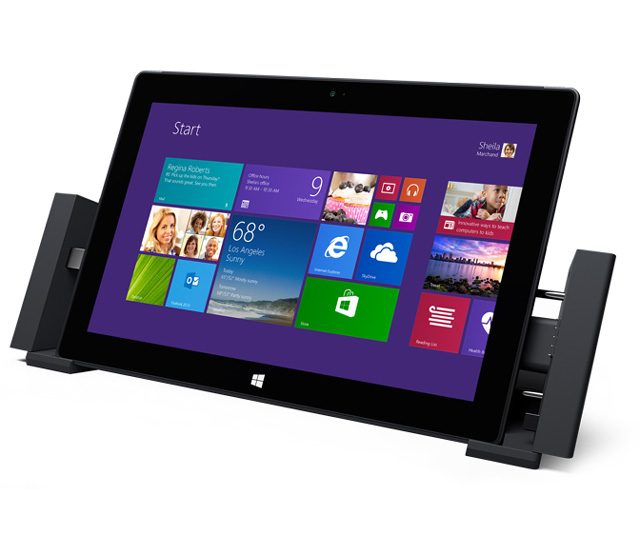
  8. The Surface dock is SICK.  I love this thing.  I don’t know why.  I’ll write more about that later since I’m one of the few that got one.
Posted by: kurtsh | October 23, 2013

VIDEO: “The World of Windows Embedded” (2 min)

Did you ever wonder how diverse & widespread the usage of Windows actually is? 

Especially through the usage of our embedded solutions, Windows is actively in use in a lot more places than you probably think.  Most of today’s modern ATMs today – especially the touch screen models, for example, use Windows Embedded but so do most of the green screen text versions as well.  (Many of these older machines are dial-up OS/2 retrofits from back in the early 2000’s) 

He’s some of the many places where Windows is used in your daily lives that you probably didn’t even know about.

World of Windows Embedded

I was recently asked what sort of training is available for end users for Visio 2013.  There’s a decent amount out there and it’s free.

image“Make the switch to Visio 2013” Training
http://office.microsoft.com/en-us/support/make-the-switch-to-visio-2013-RZ102925050.aspx?CTT=5&origin=HA104032123

  • Top changes to know about (3:20)
    Get a quick overview of the biggest changes in Visio 2013: from the start screen, to redesigned shapes, to the new .vsdx format.
  • The ribbon (4:41)
    Menus and toolbars are replaced by the ribbon. In this video, take a tour of the ribbon to find things you need.
  • Adding and changing shapes (4:04)
    Watch this video to learn how to add shapes, format them, arrange them, group them, and more. Plus, learn the new Change Shape feature.
  • The Backstage (2:19)
    This video shows you what you can find on the Backstage: from print preview, to exporting, to changing Visio options
  • Course summary
    A brief reminder of the key points in this course.

imageMicrosoft Visio Webcast Series
Ready to learn how Microsoft Visio can help you simplify your work? The new Visio makes it easier than ever to create and share professional, versatile diagrams that simplify complex information. Now’s the time to register, attend our free Visio webcast series, and find out more about Visio 2013.

All webcasts will begin at 1:30 pm EST / 10:30 am PST and will run for 90 minutes.

image

For Windows 8.1 upgraders only!

Hover is Back – Internet Explorer brings the classic Windows 95 capture-the-flag game to the web with brand new 3D graphics and touch gameplay.

Visit the official web site for Hover at http://hover.ie.  Also available for Internet Explorer 11 users to play within the browser.

Posted by: kurtsh | October 21, 2013

RELEASE: Windows 8.1 releases everywhere

imageWe’re done… and we’re shipping.

If it hasn’t shown up in the Windows Store as a free upgrade, try typing in:

ms-windows-store:WindowsUpgrade

… into your browser.

This has been one of the most satisfying releases of Windows I’ve experienced since Windows 7 – and I mean that.  All shilling aside, I’m downright giddy using my 8.1 upgraded devices in a way that I just didn’t get with regular Windows 8.  If you’re a business user using Windows 7, you really ought to try Windows 8.1.  If you’re using Windows 8, you’d have to be a nutjob not to upgrade to 8.1. 

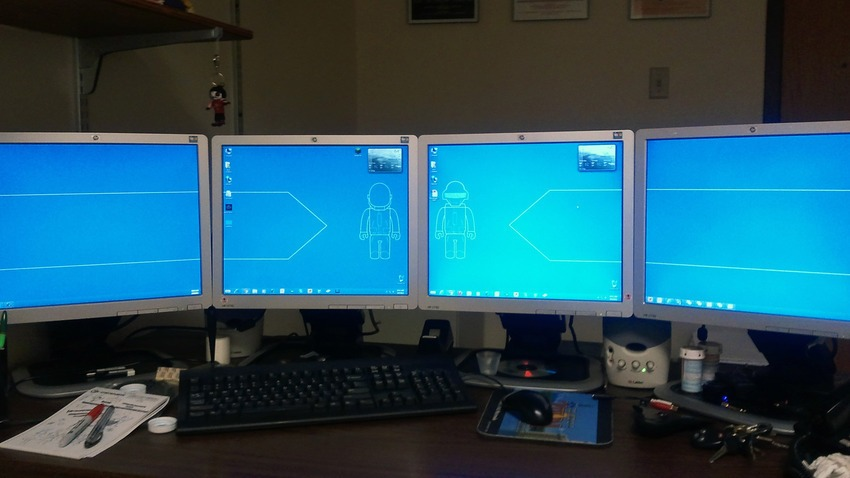
imageEverything about it feels good.  The performance improvements.  The configurability.  The fit & finish added.  The 8.1 apps & tools changes.  The unparalleled multi-monitor support.  The new support for standards like Miracast.  If you’re looking for a quick list of what makes Windows 8.1 awesome, check this article out on Mashable:
(Photo taken from Mashable’s “10 Reasons…” article below)

And here’s what the blogosphere has had to say about it so far:

image

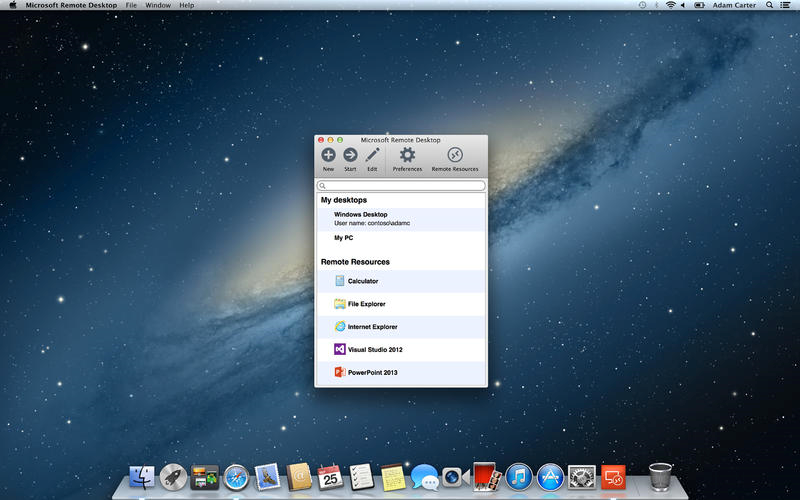
Yeah, it looks I missed this.  We actually did release the Mac OS X version of the HLW/iTap-Mobile technology for Remote Desktop.

With the Microsoft Remote Desktop app, you can connect to a remote PC and your work resources from almost anywhere. Experience the power of Windows with RemoteFX in a Remote Desktop client designed to help you get your work done wherever you are.

Features

  • Access to remote resources through the Remote Desktop Gateway
  • Secure connection to your data and applications with breakthrough Network Layer Authentication (NLA) technology
  • Simple management of all remote connections from the connection center
  • High quality video and sound streaming with improved compression and bandwidth usage
  • Easy connection to multiple monitors or projectors for presentations
  • Print from Windows applications to any printer configured on your Mac
  • Access local files on your Mac from your Windows applications

Download the tool from Apple’s App Store for Macs:

Posted by: kurtsh | October 21, 2013

RELEASE: Microsoft Remote Desktop for iOS & Android

UPDATE 10/21/13:
Looks like I totally missed this but apparently we DID in fact publish the new Remote Desktop client for MacOS X, based on the iTap-Mobile technology we acquired from HLW.  (Thanks Nathan for the heads up!)

———————
ORIGINAL POST:
imageWell, we’re still waiting for the Remote Desktop for Mac OS X technology that we acquired from HLW/iTap Mobile however in the meantime, here are the links to the FREE Remote Desktop clients for iOS & Android.

For those of you that have never had any experience with RDP clients, not all clients are created equally.  The reason this acquisition is important, among other reasons, is that the iTap Mobile suite of RDP clients that provided Remote Desktop capabilities for non-Windows platforms were very well supported and from my experience, the defacto standard for Enterprise customers that want RDP clients for non-Windows platforms. 

The HLW/iTap-Mobile technology we acquired distinguishes itself in particular by supporting both Network Location Awareness & TS Gateway, some important Enterprise features (for BYOD folks that roamed from place to place) that the previously Microsoft-in-house-developed Remote Desktop for Mac 2.11 did not support.

One thing to keep in mind is that these apps are not identical to the HLW/iTap-Mobile published clients.  They are reportedly based on the same technology but not bit-level identical.  I strongly suspect that this is because any IP that we acquire has to go through a very rigorous inspection which includes a Trustworthy Computing review (checking for vulnerable code) and an examination of the source to ensure that there aren’t libraries in use that conflict with Microsoft policy.

Just trust me.  This is an important set of tools for companies using Remote Desktop Services on Windows Server 2008/2008R2/2012/2012R2.

Posted by: kurtsh | October 20, 2013

RELEASE: Microsoft Remote Desktop for iOS & Android

imageWell, we’re still waiting for the Remote Desktop for Mac OS X technology that we acquired from HLW/iTap Mobile however in the meantime, here are the links to the FREE Remote Desktop clients for iOS & Android.

For those of you that have never had any experience with RDP clients, not all clients are created equally.  The reason this acquisition is important, among other reasons, is that the iTap Mobile suite of RDP clients that provided Remote Desktop capabilities for non-Windows platforms were very well supported and from my experience, the defacto standard for Enterprise customers that want RDP clients for non-Windows platforms. 

The HLW/iTap-Mobile technology we acquired distinguishes itself in particular by supporting both Network Location Awareness & TS Gateway, some important Enterprise features (for BYOD folks that roamed from place to place) that the previously Microsoft-in-house-developed Remote Desktop for Mac 2.11 did not support.

One thing to keep in mind is that these apps are not identical to the HLW/iTap-Mobile published clients.  They are reportedly based on the same technology but not bit-level identical.  I strongly suspect that this is because any IP that we acquire has to go through a very rigorous inspection which includes a Trustworthy Computing review (checking for vulnerable code) and an examination of the source to ensure that there aren’t libraries in use that conflict with Microsoft policy.

Just trust me.  This is an important set of tools for companies using Remote Desktop Services on Windows Server 2008/2008R2/2012/2012R2.

Posted by: kurtsh | October 20, 2013

RELEASE: Microsoft Message Analyzer 1.0

We are excited to announce the official release of Message Analyzer to the Microsoft Download Center. This really is a new beginning for troubleshooting and analysis. Message Analyzer brings a set of new ideas, new techniques, and new paradigms in order to make analysis of protocols, log files, and system events a cohesive activity which allows correlation across all those types of traces.

Microsoft Message Analyzer is a new tool for capturing, displaying, and analyzing protocol messaging traffic and other system messages. Message Analyzer also enables you to import, aggregate, and analyze data from log and trace files. It is the successor to Microsoft Network Monitor 3.4 and a key component in the Protocol Engineering Framework (PEF) that was created by Microsoft for the improvement of protocol design, development, documentation, testing, and support. With Message Analyzer, you can choose to capture data live or load archived message collections from multiple data sources simultaneously.

Message Analyzer enables you to display trace, log, and other message data in numerous data viewer formats, including a default tree grid view and other selectable graphical views that employ grids, charts, and timeline visualizer components which provide high-level data summaries and other statistics. It also enables you to configure your own custom data viewers. In addition, Message Analyzer is not only an effective tool for troubleshooting network issues, but for testing and verifying protocol implementations as well.

Please also visit Message Analyzer Team Blog for continued updates and helpful information.

In case you missed it, we published a blocker toolkit for IE11’s automatic upgrade on Windows 7 Service Pack 1 for business folk that aren’t already managing Windows Updates via WSUS or SCCM.

imageBusiness and organizations that want to manage their own update schedule can use the IE11 Automatic Update Blocker Toolkit to disable automatic delivery of Internet Explorer 11. This Blocker Toolkit—like its predecessors for IE10, IE9, IE8, and IE7—is now available on the Microsoft Download Center. While we encourage all customers to upgrade their browser to the latest version as quickly as possible, this approach enables organizations to control when they are ready to deploy IE11 to their Windows 7 users. All other Windows 7 users not using the toolkit will be automatically upgraded to IE11 through Windows Update.

The IE11 Automatic Update Blocker Toolkit can be used to prevent Internet Explorer 11 from being automatically installed on users’ Windows 7 machines when it is available via Automatic Update. This Toolkit has no expiration date and is configured either by running the registry file on the client machine or by deploying Group Policy in domain joined environments. The toolkit also provides an unblock procedure that allows IE11 to be installed through Automatic Update.

Read more here:

Download the IE11 Automatic Update Blocker Toolkit here:

Review the “Internet Explorer 11 Deployment Guide for IT Pros” here:

« Newer Posts - Older Posts »

Categories