Posted by: kurtsh | December 16, 2013

RELEASE: Internet Explorer 11 for Windows 7

Yeah, I know I’m late posting this, but in case you hadn’t heard…

Building Internet Explorer 11

IE11 for Windows 7 Globally Available for Consumers and Businesses
Internet Explorer 11 (IE11) is available worldwide in 95 languages for
download today. We will begin automatically updating Windows 7 customers to IE11 in the weeks ahead, starting today with customers running the IE11 Developer and Release Previews. With this final release, IE11 brings the same leading standards support–with improved performance, security, privacy, and reliability that consumers enjoy on Windows 8.1—to Windows 7 customers.

And with Windows 8.1, IE11 delivers the best experience of your sites and apps together. IE11 on Windows 8.1 delivers an experience that is fast, fluid and perfect for touch – the best Web experience on any tablet.

Read more here:

Posted by: kurtsh | December 16, 2013

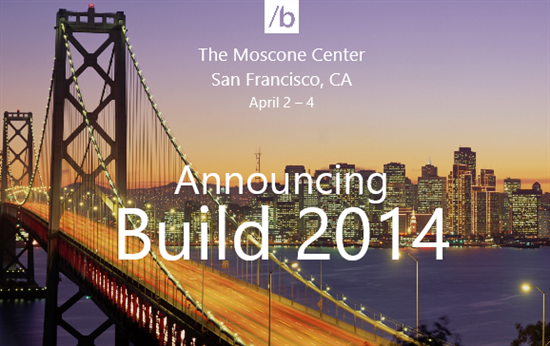
EVENT: BUILD 2014 – San Francisco, April 2nd, 2014

image

We just announced the dates of the annual BUIILD conference, the 3 day event for developers interested in building solutions on Windows, Windows Phone, Windows Azure, Windows Server, Visual studio, etc.

The momentum just keeps building and that is why I’m so excited to announce our next developer conference, Build 2014, which will take place April 2 to April 4 at the Moscone Center in San Francisco. Save the date and mark your calendar for registration, which opens at 9 a.m. PT on Jan. 14 at www.buildwindows.com.

Last year’s event had over 6000 attendees and was sold out in just a couple hours so when the registration opens up on Jan 14th, I’d be prepared with your browser open.

Read more at the Microsoft Blog:

Posted by: kurtsh | December 12, 2013

RELEASE: Security Intelligence Report v15 from Microsoft

Microsoft recently released volume 15 of the Microsoft Security Intelligence Report (SIR) (download PDF), with insights on security vulnerabilities, exploit activity, malware and potentially unwanted software, spam, phishing, malicious websites, and security trends worldwide.

image

Threat awareness can help you protect your organization, software, and people, and the SIR is a great source of data to build that awareness.

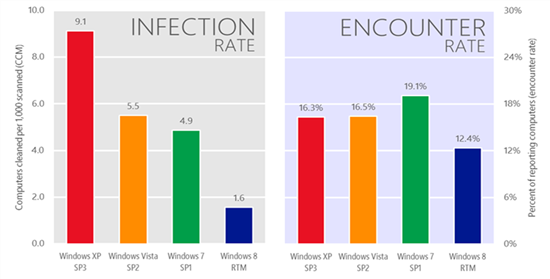
The latest report, SIRv15 includes new information about the security benefits of running a modern operating system. Data shows that while all currently supported versions of Windows (Windows XP, Windows Vista, Windows 7 and Windows 8) are exposed to similar amounts of malware, the infection rate on Windows XP was six times higher than that of Windows 8.

And computers running Windows XP will face even greater security risks once support ends for the operating system in April 2014. Current Windows XP users are strongly encouraged to upgrade to a modern operating system before that deadline.  Trustworthy Computing Director Tim Rains discusses this subject further in a related blog post.

The SIR is the most comprehensive report on cybersecurity threat trends in the industry, and offers prescriptive guidance to help customers manage risk and protect their assets.  It also includes Regional Threat Assessments for more than 100 countries and regions around the world.

Check it out here:

Kinect & Sign Language Translation


What’s on the horizon with Kinect – sign language interpretation.  Note: This is research being done with the original low-resolution Kinect and not the new high resolution, high power Kinect 2.

Posted by: kurtsh | December 12, 2013

RELEASE: Release Management for Visual Studio 2013

imageDevOps is an increasingly important part of application lifecycle management and is a growing area of interest as businesses need to develop and deploy quality applications at a faster pace. As part of this increased focus, we’re excited to announce Release Management for Visual Studio 2013, a solution for .NET and Windows Server applications.

Release Management for Visual Studio 2013 is a continuous delivery solution that works with VS 2010, 2012, and 2013 that automates the release process through all of your environments from TFS through to production, all in one solution, and all integrated with TFS. Here are some resources that will help you get started with this area.

For more on this, read the announcement post at:

Posted by: kurtsh | December 12, 2013

HOWTO: Migrate from Gmail to Outlook.com

By now, it should be common knowledge that Google generates a persistent “dossier” or “profile” on each of its Gmail users to provide rich targeting for the advertising they sell to their advertisers.  If you don’t know about this, you need to read this site carefully:

For folks that would prefer to use a messaging service that DOESN’T DO THIS, we have provided a migration path for Gmail users to Outlook.com… and guess what?  We now do all the heavy lifting for you.

NO COMMITMENT BEFORE OR AFTER
To be clear:  You make NO commitment to moving to Outlook.com even after the migration takes place.  Nothing is changed.  All Microsoft does is:

  • Copy your email over to a new Outlook.com account, including attributes, flags, etc.
  • Provide guidance on auto-forwarding your Gmail to your Outlook.com email

If you want to switch back, there’s nothing you need to do.  You can continue to use your Gmail account like nothing ever happened.  Our bet is that you won’t.

HOW TO SWITCH TO OUTLOOK.COM
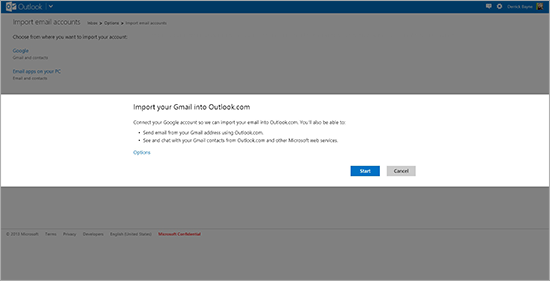
All you need to do is follow a few simple steps to connect your Gmail account (using OAuth) to your Outlook.com account (if you don’t already have one, it’s easy to get). This will import your Gmail emails into your Outlook.com inbox and, because you’ve connected both accounts, your Google contacts will automatically appear in Outlook.com. The structure of your inbox, including read/unread status of your emails, will be preserved. The new tool will even set up your Gmail address as a "send-only" account so you can continue to send email from your @gmail.com address, right from Outlook.com, if you still want to.

image

For more details on this, please visit our announcement page at:

Posted by: kurtsh | December 12, 2013

INFO: Project Conference 2014 full session list

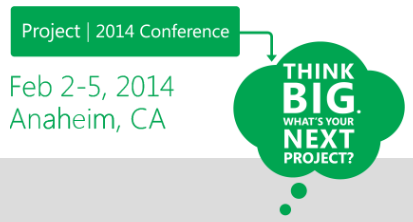
imageNearly 100 sessions are now available at the Project Conference Website, and it’s time to start finding the content that’s best for you. 

Sessions are broken into three tracks–Business, Product, and Technical–to ensure that there is plenty of content for Business Decision Makers, Project Practitioners, and Technical Professionals. Read detailed descriptions and speaker bios are available for our Top 10 Sessions, then review the full session list with helpful filters before you register for the event.

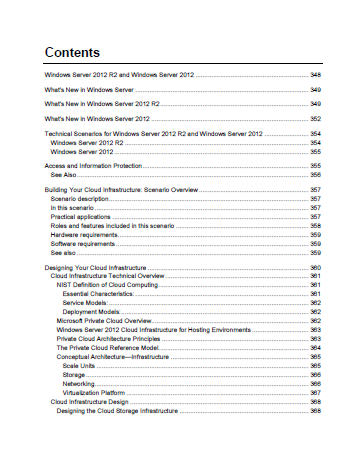
imageThis download is an Adobe® PDF of the entire contents of the Windows Server 2012 R2 and Windows Server 2012 section of the Microsoft TechNet Library, for the convenience of Windows Server users who have limited Internet access, or require a portable version of the Windows Server 2012 R2 and Windows Server 2012 documentation. The PDF is 116 MB, and 7,970 pages in length. Highlights of the PDF include the following.

DOWNLOAD: Windows Server 2012 R2 & Windows Server 2012 TechNet Library Documentation (110.9 MB, 7970 pages)
http://www.microsoft.com/en-us/download/details.aspx?id=41182

imageEach December, we feature an animated, musical, customizable holiday e-card by PowerPoint MVP Sandra Johnson. To see this year’s dazzling work of art and create your own personalized greeting, click the tree image below.

To download and customize the card, go here. (See if you can find the hidden surprise in this card. For a hint, see the notes section of the slide.)

To play the card in PowerPoint after you download and customize it, go to the Slide Show tab. Then, in the Start Slide Show group, click From Beginning.

You can learn more about Sandra and her work at http://www.presentationwiz.biz.

Watch the BlueHat blog for more information about the results of this conference.  (It’s Invite-only and I have no control over the invite list.  Sorry.)

This week, starting Thursday, we’ll be hosting our 13th edition of BlueHat. I’m always so impressed with the level of knowledge we attract to each BlueHat, and while the event is invite-only, we’ll be sharing glimpses into the event via this blog and the hashtag #BlueHat.

For each of the past six years I have had the honor to work among some of the most talented engineers I have ever met, here at Microsoft. I am inspired by the mission we embrace in securing our products, devices, and services. There are few other vantage points with as broad a footprint on the internet, since one of Microsoft’s early mottos helped put “a computer in every home.” Our job in the Microsoft Security Response Center (MSRC) is to help protect the customers who use the technology that the rest of the company works so hard to create. In everything we do in the MSRC, we strive to fulfill our mission to help insure the security and privacy of over a billion computer systems and our customers worldwide.

In 2005, we started the BlueHat conference to educate the developers and executives of Microsoft about current and emerging threats. The idea was to bring the hackers and security researchers to us, and in doing so foster an environment where the bidirectional exchange of ideas around the balance between security and functionality could meet fertile ground in the famed “hallway track.” We hand-pick just a small number of speakers and external attendees to concentrate on learning from them in most cases, and the chance to teach some of them from what we have learned, to help enhance the security and privacy of the Internet as a whole.

This year is no different in that we have invited speakers chosen to educate, amaze, and work with Microsoft to help us understand the emerging security threats to us and our customers. Together, we will rise to face the most important challenges in helping to secure the global Internet ecosystem.

Beginning on Dec 12, 2013, we’ll begin this year’s BlueHat by focusing on the threat landscape, learning about determined adversaries to help us defend our own network and assets, and tools to detect and mitigate attacks. Next we’ll welcome some of the world’s top experts to discuss devices and services, from low-level hardware to web services, to help us build products, devices, and services that are more secure from the ground up.

Finally, we’ll close out the conference with a thought-provoking track that I like to call the “Persistence of Trust,” where we will discuss the core elements that comprise the trust we rely on to support what the Internet has become – a global information sharing network that humanity uses to exchange goods, services, money, and most importantly, ideas. To support these functions, we must strengthen the technology that underlies and supports that trust, and we must design products, devices, and services that are resistant to security and privacy breaches.

Read more here…

« Newer Posts - Older Posts »

Categories