Posted by: kurtsh | November 22, 2024

NEWS: Agents for Microsoft 365 (for Microsoft 365 Copilot)

At Ignite 2024, we introduced the preview of new out-of-the-box agents in Microsoft 365, including the Facilitator, Interpreter, Project Manager, Employee Self-Service Agent, and Agents in SharePoint. These are new agents that you can experience directly out-of-the-box within Microsoft 365 apps. These new agents supercharge Copilot – adding specialized skills and knowledge while automating specific tasks at hand. These out-of-the-box agents take on unique roles, working alongside or on behalf of a team or organization. They handle simple, mundane tasks to more complex and multi-step business processes. These agents in Microsoft 365 will drive the next level of business value for every organization.

Here’s a short video that goes over all the new agents announced:

What is the Facilitator agent?

The Facilitator agent works within Teams meetings and chats for more effective collaboration. In meetings, the Facilitator generates real-time AI notes during your meetings, allowing everyone to co- author and collaborate seamlessly. In chats, the Facilitator maintains an up-to-date summary of important information as the conversation happens, including key decisions, actions items, and open questions to resolve. This new agent is available in public preview.

What is the Interpreter agent?

The Interpreter agent enables real-time speech-to-speech interpretation in Teams meetings so each participant can speak and listen in the language of their choice in up to nine languages, instantly overcoming language barriers. Meeting participants can also have the Interpreter simulate their personal voice for a more inclusive experience. This new agent will be available in public preview in 2025.

What is the Project Manager agent?

The Project Manager agent automates project management in Planner, handling everything from plan creation to executing tasks. Whether it’s a long-running or a short-term project, the Project Manager can automatically create a new plan from scratch or use a pre-configured template by simply inputting the goals. Once the plan is in place in Planner, the Project Manager oversees the entire project, including the assignment of tasks, progress tracking, reminders and notifications, and status reporting. It can also complete tasks, including content creation. This new agent is available in public preview. 553. PUBLIC

What are Agents in SharePoint?

Agents in SharePoint empower employees to gain insights faster and make informed decisions grounded on specific SharePoint content. Every SharePoint site now includes an agent for immediate use. Users can easily create their own agents with just a few clicks, tailored to specific SharePoint files, folders, or sites that support common business process such as field service reps using the agent for product installations or finance teams using the agent to manage quarterly budget planning with data grounded on the company’s budget policies and forecast information. These agents can be edited to have a personalized name and certain behaviors, and can be shared across emails, meetings, and chats, with users being able to ask the agent questions and getting real-time responses. They can also be customized in Copilot Studio, where admins can connect to third-party data sources and add actions and further automate workflows. Agents in SharePoint follow existing SharePoint user permissions and sensitivity labels to prevent the oversharing of sensitive information and are built on the same powerful AI technology as Microsoft 365 Copilot, ensuring data stays within the Microsoft 365 trust boundary. Agents in SharePoint are generally available.

What is the Employee Self-Service Agent?

The Employee Self-Service Agent in Microsoft 365 Copilot Business Chat (BizChat) expedites answers for the most common workplace policy-related questions and takes action on key HR and IT related-tasks. From Business Chat, users can retrieve benefits and payroll information, start a leave of absence, request a new laptop with IT and even get assistance for Microsoft 365 products and services, all in one place. The agent is customizable in Copilot Studio, where admins can use a variety of tools and data sources including: pre-configured templates, workflows, and connectors; authoritative knowledge sources such as SharePoint, HR (Workday), IT systems (SAP and ServiceNow); and a library of tailored responses to sensitive topics. This new agent is available in private preview.

What licensing is required to access the public preview of agents in Microsoft 365?

For the public preview of the Facilitator, Interpreter, and Project Manager agents, customers are required to have a Microsoft 365 Copilot license to access these agents in Microsoft 365. Beyond preview access, additional licensing details will be communicated at a future date.

Posted by: kurtsh | November 22, 2024

INFO: Engaging Public Sector as a Microsoft Partner

I’m post something a little different today… this is for Microsoft professional services “partners”.

I’ve received a lot questions recently from professional services providers looking to engage State & Local Government customers. I’m by no means an expert on the topic so for those without any experience working in the US Public Sector, your first place for guidance should likely be your Microsoft Partner Development Manager.

GOVERNMENT CONTRACTING VEHICLES
Although one thing that I’m personally often challenged with is whether or not a potential services partner (traditionally used to working on commercial/enterprise services engagements) has any *government* contracting vehicles established. Typical vehicles include CMAS, NASPO, OASIS, etc.

Without having access to an organizational contracting vehicle that a government organization will accept, it’s a challenge to be able to work for & engage state & local government institutions as a Professional Services provider. I generally recommend investigating qualifying for State & Local Government contracting vehicles if public sector is an area you’d like to deliver services to. Here’s some examples of partners Microsoft commonly works with in the US Public Sector that have established government contracting vehicles across many states – along with the contracting vehicles they have established:

(Note: We have many other partners that deliver consulting services to US government entities however I’m using these as examples because, well, I know them, they’ve done work for my customers & they’ve all published the contracting vehicles they’ve qualified for on their web sites)

FUNDING PROGRAMS
For professional services providers that don’t have any contracting vehicles, it’s going to be hard to do business for municipal organizations. One way MAY be to pursue qualifying as an ECIF (End Customer Investment Funds) or AMMP (Azure Migrate & Modernize Program) qualified Microsoft partner.  Work through your Microsoft Partner Development Manager for guidance on the qualifications for these Microsoft programs and how to proceed. 

I recommend this as a potential avenue because *occasionally* (not always) some public sector customers will accept work from Microsoft partners paid by Microsoft ECIF/AMMP funding WITHOUT a public sector contracting vehicle if they can ‘sole source’ the engagement on the basis of simply stating, “Microsoft is paying for it, this is the partner/professional services organization they’ve chosen & it’s their money. Full stop.” 😊.  It’s one potential way to get to work with State & Local Government organizations even if you don’t have a contracting vehicle to work anywhere.

Again, information on this should be obtained directly from your PDM however, here’s some pointers to information that may be helpful:

Take a look at the following published on Tuesday from the Microsoft DevOps product group, announced during Microsoft Ignite 2024:

Licensing integration

For some time now, Visual Studio subscribers have had usage rights for both GitHub Enterprise and Azure DevOps. But other users have had to pay for both products to use them together … until now! We are excited to announce that starting in December, we are including Azure DevOps Basic usage rights with GitHub Enterprise licenses and automating the experience for Azure DevOps customers.

Just as with Visual Studio subscriptions, we will automatically detect GitHub Enterprise Licenses for users when they log into Azure DevOps and grant them a new GitHub Enterprise access level (with access equivalent to Azure DevOps Basic).

This capability will begin lighting up for GitHub Enterprise Cloud customers in December, and for GitHub Enterprise Cloud with Data Residency customers early in the new year.

We are committed to enabling Azure DevOps customers to get the best out of both Azure DevOps and GitHub. We hope you’ll try out the latest integrations and innovations and let us know what you think!

UPDATE 4/9/26:
With the increase in interest of integrating Microsoft 365 Copilot & Copilot Studio with ServiceNow, here’s additional material on the subject:

ORIGINAL 11/21/24:
Wanna build a “Copilot” or an Artificial Intelligence bot that connects to your ServiceNow knowledgebase?

That’s what my coworker, Microsoft Technology Specialist Sherwin Shaffie, documented in this short 20min video tutorial. If you have Copilot Studio available (which comes with Microsoft 365 Copilot) you can set this up fairly quickly.

You’ll be able to stay within Microsoft Teams & use Copilot with natural language to check on your ServiceNow tickets & priorities easily.

Posted by: kurtsh | November 19, 2024

INFO: “Book of News” for Microsoft Ignite 2024

Read the Book of News (https://aka.ms/Ignite24/BON) for the full set of announcements we’ve made at Microsoft Ignite 2024, and the Official Microsoft Blog (https://aka.ms/Ignite24/OMB) to learn more about our key announcements.

Here’s the Table of Contents:

Posted by: kurtsh | November 19, 2024

INFO: Azure Adaptive Cloud Community – Monthly Meeting

[taken from the Microsoft Adaptive Cloud Community page]
Once a month, the various Adaptive Cloud product groups at Microsoft:

  • Azure Arc
  • Azure Stack HCI
  • Azure IoT
  • Azure Kubernetes Service

…hold a call to showcase new features, talk through important topics and engage in a Q&A regarding hybrid, multicloud, and edge. The foundational goals of the call are highlighted below:

  • Provide the Adaptive Cloud community with product updates for products and services such as Azure Arc, Azure Stack HCI, Azure IoT, AKS and much more.
  • Host a short talk and/or demo on Azure Adaptive Cloud technologies and products technologies
  • Collect feedback from the community on issues, blockers, use cases, and questions related to Azure Adaptive Cloud technologies and products

Who is the “community”? 💬

If you are a customer, partner, Microsoft employee, or just someone who loves tech, for us, you are part of our community. The content presented in our calls is not under a non-disclosure agreement (NDA) and is public because our mission is just to spread the ❤️ for Azure Adaptive Cloud solutions and technologies.

Meetup agenda 📃

Each monthly meetup will be 1 hour, don’t be late, we have a lot to cover! 🤓

  • 2 minutes: Welcome
  • 45-50 minutes: Product updates
  • 5-10 minutes: “Ask us anything” and feedback discussion

Meeting links and recordings ⏺️

AssetLink
🍪 Teams Channel – GuestsIf you are a guest, join the Microsoft Teams channel by submitting this form
🍪 Teams Channel – Microsoft FTEIf you are a Microsoft FTE, join the Microsoft Teams channel using this link
🍪 LinkedIn GroupJoin the Adaptive Cloud LinkedIn Group using this link
📝 Meeting presentationsView
🎥 Meeting recordingsWatch
📅 Upcoming meetup calendar inviteDownload the ics file to put a recurring event on your calendar.

Adaptive Cloud resources 📄

To learn about Microsoft’s Azure Adaptive Cloud approach, get started with our homepage.

Adaptive Cloud blogs

Azure documentation

Addtional key assets

Contact Us 📞

Reach out to us on our Teams channel (make sure to use the @General hashtag) or at distribution list and we’ll make sure to answer your questions as soon as possible!

If you’re a Microsoft managed customer, you likely have access to most of the Artificial Intelligence solutions below, so you may be interested in what we have to offer in terms of understanding how to develop & all-encompassing AI strategy.

The full documentation is available in the link below, but here is an except:
AI Strategy – Recommendations for organizations developing an AI adoption strategy – Cloud Adoption Framework | Microsoft Learn

—————–

Define an AI technology strategy

An AI technology strategy involves selecting the right tools and platforms for your generative and nongenerative AI use cases. You need to pick AI solutions that align with your skill set, data readiness, and budget. Microsoft has a variety of AI solutions to align with different needs. There are software as a service (SaaS), platform as a service (PaaS), and infrastructure as a service (IaaS) options. The service model you choose affects the AI shared responsibility between you and Microsoft.

Use the following AI decision tree to narrow down options for each AI use case. Review all the options before making your initial decision. When you identify an AI service, confirm that the service is a good fit. Use the following guidance to validate the skills needed, data needed, and cost factors to ensure success.

The official Microsoft Ignite 2024 session catalog as is the “session scheduler” for registered virtual & in-person attendees.  Adaptive cloud is a showcase topic at Ignite this year has 4 break-out sessions, 3 theater style demo sessions, 1 Hands-on-lab and a pre-day for a deeper dive on scenarios and architectural patterns.

If you’re interested in the NEW “Windows Server Management enabled by Azure Arc“, you’ll want to attend a few of these “Adaptive cloud” sessions:

As you browse through the catalog, you will also see a range of partner and technical sessions that also highlight or relate to the adaptive cloud approach such as “How AI is transforming the Migration economic opportunity for Partners” and “Windows Server 2025: New ways to gain cloud agility and security”.

Expert Meet-ups

The show floor (aka the “Hub”) delivers an opportunity for attendees to meet experts on products and topics. Expert Meetups are supported by speakers, non-speaker experts and a limited number of MVPs.  Of the 9 Expert Meetups for Azure Infrastructure, two have an adaptive cloud focus:

  • Azure Arc & Azure Local (Hybrid, Multi-cloud, Edge)
  • Copilot & Azure Monitor (AI-enhanced operations)

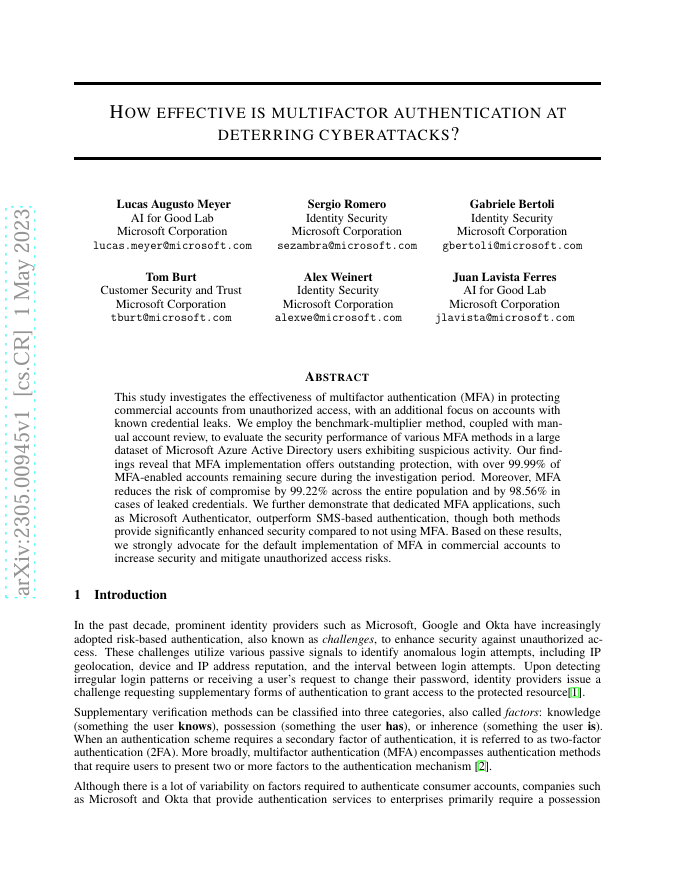
Microsoft 365 Admin Center will start mandating the use of Multifactor Authentication (MFA) when anyone tries to access the Microsoft 365 admin center – beginning February 3rd, 2025.

If you haven’t already mandated the use of Multifactor Authentication for your Microsoft 365 Administrators, you have roughly 2 months to set them up.

Next steps

Read more about this requirement here:

Posted by: kurtsh | November 14, 2024

INFO: Techniques for reducing your Azure costs

imageWe did an Microsoft Mechanics video last year on “Quick ways to reduce your Azure costs” that was quite thorough and I’m constantly referring customers to it, so to make sure it’s on everyone’s radar, here’s a quick link to it:

  • 00:54 – Savings with Azure Hybrid Benefit
  • 02:18 – Constrained vCPU options
  • 03:30 – Commitment-based savings plans
  • 05:03 – Savings plans and reserved instances
  • 06:12 – Microsoft Cost Management
  • 06:44 – Budget limits and automation runbooks
  • 08:57 – Azure VM Scale Sets
  • 11:24 – Storage cost management

References:

Here’s the main video link:

« Newer Posts - Older Posts »

Categories