I bought an Intel Centrino Advanced-N 6230 – Network adapter (Mini PCI-E). Why’d I do that? Because the adapter in the Samsung Series 9 is a little questionable:  The Bluetooth was unreliable and the range on the adapter wasn’t great, despite having replaced the original with another Broadcom adapter twice.

If you’re interested in doing the same thing, here’s the instructions on how to accomplish this:

  1. Purchase a Intel Centrino Advanced-N 6230 – Network adapter (Mini PCI-E) for $19 each.  This is the cheapest that I was able to find the adapter at.  Other places sell it for as high as $60… the hell?
    http://www.macmall.com/p/Intel-Wireless-Networking/product~dpno~8355777~pdp.gdicdec
  2. Replace the Broadcom WiFi Bluetooth adapter on your device. Be extra careful reattaching the antenna as it’s fragile and not easily replaceable… if at all.  TechRepublic has a photo of the adapter location on the unit here:
    http://www.techrepublic.com/photos/cracking-open-the-samsung-series-9-ultraportable-notebook/6235888?seq=50&tag=thumbnail-view-selector;get-photo-roto
  3. Download & install the latest driver for the Intel® PROSet/Wireless WiFi Connection Utility (for Intel® Centrino® Advanced-N 6200 series):
    http://downloadcenter.intel.com/Detail_Desc.aspx?agr=Y&ProdId=3227&DwnldID=19856
    (Note: You won’t need Bluetooth drivers as the existing Bluetooth drivers on your system should work just fine.)

EXTRA CREDIT: SETTING UP INTEL WIDI

Incidentally, if you want to enable your computer for Intel WiDi (Wireless Display technology that allows you to send your display to your home big screen/LCD television), here’s the web site on how to do this once you have the Intel Centrino 6230 installed on your computer. It’s similar to Apple’s Airplay.
http://www.intel.com/support/wireless/wtech/iwd/sb/CS-031109.htm

The above will work for normal, non-protected content like YouTube, Hulu, or locally stored videos.  For playback of DVDs, Bluray, or rights protected streams like Netflix, you’ll need to enable WiDi protection by following these steps.
http://www.intel.com/support/wireless/wtech/iwd/sb/CS-032474.htm

Posted by: kurtsh | August 7, 2011

BETA: System Center Operations Manager 2012

imageLike most companies today, you rely on your IT infrastructure to keep your business running. You need to find out about and fix IT problems before they lead to any downtime or loss of productivity and revenue. This becomes even more challenging when you depend on a combination of physical, virtual, and cloud resources to run a diverse mix of operating systems (Windows, Linux, and Unix) that support any number of critical business applications. Microsoft understands these challenges and is dedicated to helping customers address these issues.

System Center Operations Manager 2012 provides the solution to the challenges mentioned above by:

  • Delivering flexible and cost effective enterprise-class monitoring and diagnostics while reducing the total cost of ownership by leveraging commodity hardware with standard configurations to monitor heterogeneous environments.
  • Helping to ensure the availability of business-critical applications and services through market-leading .NET application performance monitoring and diagnostics plus JEE application health monitoring.
  • Providing a comprehensive view of datacenters, and private and public clouds.

Here’s what’s new

  • Rich application performance monitoring and diagnostics for .NET applications plus JEE application health monitoring
  • Support for monitoring heterogeneous environments
  • Integrated network device monitoring and alerts
  • Simplified management infrastructure
  • Common console across datacenter and clouds with customizable dashboards

Download the beta here.

For more information, visit the new Operations Manager 2012 beta page.

[taken from the SCOM blog]

Posted by: kurtsh | August 7, 2011

RELEASE: Lunch & Learn SharePoint Adoption Kit

Download the Lunch & Learn SharePoint Adoption Kit.
The Lunch & Learn kit contains all the materials you need to promote SharePoint within your organization. The kit includes instructions, templates, videos, quick reference cards and more to help you deploy an internal SharePoint resource site – a place to access SharePoint information and tools, and connect around the best part of the day: lunch.

Download this kit to show your team how SharePoint makes life, and lunch, a little better.

Posted by: kurtsh | August 7, 2011

EVENT: SharePoint Conference 2010 Session List

imageJust noticed that they posted the session list on the SharePoint Conference web site.
http://www.mssharepointconference.com
/pages/sessions.aspx

There are 210 sessions to attend during the week long event.  This is a gonna be a whopper of an event.  Here are the pivots around the different sessions going on.

Posted by: kurtsh | August 7, 2011

INFO: Troubleshooting SharePoint People Search

imageThis is a repost – in it’s entirety – of a post from the GetThePoint blog.  I’m doing this because it’s THAT important to SharePoint Search Admins.

Please take the time to investigate this.  It’s a got a TON of fantastic info.

Have you been scratching your head about how to approach People Search for your SharePoint site or how to try enabling it again? You know you need to do this because a good Search tool is the mesh that helps connect all the disparate parties who contribute to your sites. But, how to proceed?

You might find this detailed and well-illustrated post interesting. It discusses how one might enable SharePoint Search, avoid pitfalls, and work around possible snags:  Troubleshooting SharePoint Search

Paul, the author, provides basic deployment steps for less-experienced administrators, presents a brief explanation for more advanced admins, and dives deep to suggest ways to work around difficulties, both known and more obscure. Suggested work-arounds cover the following topics, among others:

  • The loopback issue where search crawling fails and results in an Access Denied error. The post gives two ways to fix this via a registry update: a quick way and a right way.
  • Search problems with HTTPS sites. The post presents a simple solution, involving a one-line configuration update.
  • Problems associated with Active Directory policies, namely those involved with enforcing proxy server and security settings (like those affecting trusted sites lists). The post presents several options for dealing with this.

Check it out! It’s a bit lengthy but worth the read if SharePoint Search is in your path

[taken from http://blogs.msdn.com/b/microsoft_press/archive/2011/07/19/new-book-windows-sysinternals-administrator-s-reference.aspx]

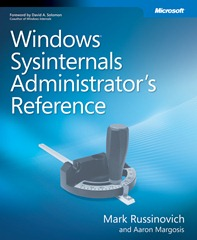
imageI usually don’t hype books too much, but damn, if this isn’t a long time coming.  These are the kind of tools that you really want to have a paper reference for.

Here’s a sample from the blog announcement:

“Aaron Margosis and I are thrilled to announce that the long awaited, and some say long overdue, official guide to the Sysinternals tools is now available! I’ve always had the idea of writing a book on the tools in the back of my mind, but it wasn’t until a couple of years ago that Dave Solomon, my coauthor on Windows Internals, convinced me to pursue it. After a few false starts, I decided that a coauthor would help get the book done more quickly, and turned to Aaron, a good friend of mine who’s also a long-time user and expert on the tools at his day job in the Federal Division of Microsoft Consulting Services. It was a great choice and I’m proud to put the Sysinternals brand on the book.

Whether you’re new to the tools or have been using them since Bryce Cogswell (my Sysinternals and Winternals Software cofounder, now retired) and I released NTFSDOS in 1996, you’re sure to take away new insights that will give you the edge when tackling tough problems and managing your Windows systems.

The book covers all 70+ tools, with chapters dedicated to the major tools like Process Explorer, Process Monitor, and Autoruns. For each we provide a thorough tour of all of the tool’s features, how to use the tool, and include our favorite tips and techniques. There’s no better way to learn than by example, though. The last section of the book will be familiar to anyone that’s read this blog or watched my Case of the Unexplained conference sessions, because it presents 17 real-world cases that show how Windows power users and administrators like you solved otherwise impossible-to-solve problems by using the tools.

…

The book is available for purchase on Amazon.com and available from O’Reilly in 4 ebook formats, or you can read it online through Safari.

Microsoft owns 4 of the top 10 largest datacenters worldwide which house the Microsoft Cloud presence.

This video (posted Jul 24, 2011) will provide a deeper look at how Microsoft uses secure, reliable, scalable and efficient best practices to deliver over 200 cloud services to more than a billion customers and 20 million businesses in over 70 countries.It provides an understanding at how we view our end-to-end cloud strategy from an infrastructure perspective.

Microsoft GFS Datacenter Tour
Posted by: kurtsh | August 7, 2011

HOWTO: Search Google anonymously

imageI’m an avid Bing user.  On rare occasion, I find myself wanting to check another search engine other than Bing for search results. 

The problem is:  If I check Google, I don’t want my identity, PC, or search details or search activity tracked back to me, and I certainly don’t want Google collecting information about what I do from my PC.  (Something they do actively monitor because your unique behavior is valuable to advertisers for targeting)  Between the details they attempt to collect from all the people using AdSense & sites leveraging Google Analytics, it’s hard enough trying to stay away from their tracking.

I’ve written about this before, but just to reiterate, to configure your machine to alternatively search Google without:

  • getting your search stored on the Internet in logs for longer than 24 hours
  • having your Internet search terms & usage behavior tied to your identity
  • revealing what you click on in the search results and having it captured

WHAT TO DO
Follow the following steps in Internet Explorer (7/8/9):

  1. Go to http://www.microsoft.com/windows/ie/searchguide/en-en/default.mspx
  2. Enter https://ssl.scroogle.org/cgi-bin/nbbw.cgi?Gw=TEST in the field labeled:  “Paste the URL of the Search results page”
  3. Enter “Scroogle SSL” in the field labeled: “Specify a name for the search provider”
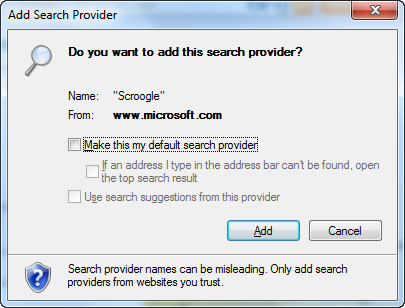
  4. Press ENTER button.  A dialog box called “Add Search Provider” will appear.
  5. Press “Add” button.

From this point on, anytime you want to alternatively search Google, simply type your search query into the URL field in Internet Explorer and select the Scroogle SSL search icon – which should look like a G with a circle & slash through it:

image

WHAT THIS DOES
imageThis leverages Scroogle, a 3rd party entity that exists to help protect your identity from Google and prevent your preferences, choices, and Internet behavior from being tracked by Google.  This will accomplish the following:

  • Act as a go-between between you and Google to prevent them from tying your search query to your personal computer, browser, identity, and of course tracking tags like cookies – Scroogle replaces all your identifying information with that of Scroogle.
  • Clear your search from the face of the earth in 48 hours by wiping their logs nightly – as opposed to being archived for months if not permanently
  • Securely transmit & receive your search query & results to & from Scroogle over SSL to prevent traffic scanners like WebSense and other tools from inspecting & recording your activities
  • Filter out Google advertising except for paid-placement in Google’s search results

WHO IS SCROOGLE?
Good question.  A good deal about Scroogle and what they do and why they do it is written up in the following two links:

Posted by: kurtsh | August 6, 2011

DOWNLOAD: SharePoint 2010 Technical Diagrams & Posters

WOW.  A huge cache of 24 downloadable digital posters for SharePoint 2010.  Foundation and Server.  Grab the ones you need below!

Tips for printing posters
If you have a plotter, you can print these posters in their full size. If you don’t have plotter, use the following steps to print on smaller paper.

Print posters on smaller paper

  1. Open the poster in Visio.
  2. On the File menu, click Page Setup.
  3. On the Print Setup tab, in the Printer paper section, select the size of paper you want to print on.
  4. On the Print Setup tab, in the Print zoom section, click Fit to, and then enter 1 sheet across by 1 sheet down.
  5. On the Page Size tab, click Size to fit drawing contents, and then click OK.
  6. On the File menu, click Print.

If you want to create posters that use the same symbols as these posters, you can download Visio stencils for posters (http://www.microsoft.com/downloads/en/details.aspx?FamilyID=88e03d22-8f42-4c9d-94ef-d8e48322d677).

DOWNLOADABLE POSTERS:

  • imageDesign Sample: Corporate Portal with Classic Authentication
  • Design Sample: Corporate Portal with Claims-based Authentication
  • SharePoint 2010 Products Deployment
  • Services in SharePoint 2010 Products
  • Cross-farm Services in SharePoint 2010 Products
  • Topologies for SharePoint Server 2010
  • Extranet Topologies for SharePoint 2010 Products
  • Hosting Environments in SharePoint 2010 Products
  • Search Technologies for SharePoint 2010 Products
  • Search Environment Planning for Microsoft SharePoint Server 2010
  • Search Architectures for Microsoft SharePoint Server 2010
  • Design Search Architectures for Microsoft SharePoint Server 2010
  • Global Solutions for SharePoint 2010 Products
  • Business Connectivity Services Model
  • Content Deployment in SharePoint Server 2010
  • Microsoft SharePoint Server 2010 Upgrade Planning
  • Microsoft SharePoint Server 2010 Upgrade Approaches
  • imageMicrosoft SharePoint Server 2010 — Test Your Upgrade Process
  • Microsoft SharePoint Server 2010 — Services Upgrade
  • Microsoft SharePoint Server 2010 — Upgrading Parent and Child Farms
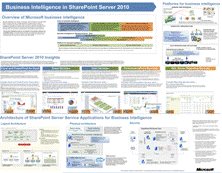
  • Getting started with business intelligence in SharePoint Server 2010
  • Databases That Support SharePoint 2010 Products
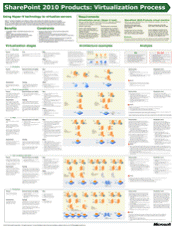
  • SharePoint 2010 Products: Virtualization Process
  • Governance for SharePoint Server 2010
  • Duet Enterprise for Microsoft SharePoint and SAP Poster

DOWNLOAD:  Technical diagrams (SharePoint Server 2010)
http://technet.microsoft.com/en-us/library/cc263199.aspx

imageLearn how you can lay a deep foundation for your SharePoint Server 2010 Business Composites skills in this training course.

This course covers a SharePoint Server 2010 Composites overview, and all of these aspects for SharePoint Server 2010:

  • Access Services
  • InfoPath Forms Services
  • Workflows in SharePoint Server 2010
  • Business Connectivity Services
  • SharePoint Business Intelligence
  • Composites Service Application Configuration

Download the lab manuals for this course here. To view the entire course, visit:

« Newer Posts - Older Posts »

Categories