Posted by: kurtsh | May 10, 2018

BETA: Azure Confidential Compute Platform

Microsoft’s Azure Confidential Computing platform is uniquely designed to protect data while in use.

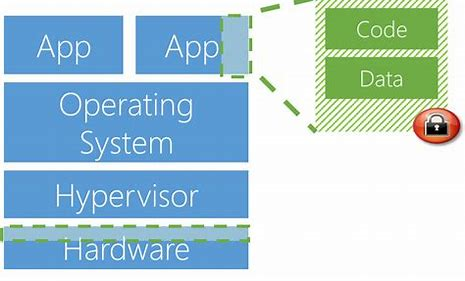
imageAzure Confidential Computing is aimed at protecting data while it’s processed in the cloud. It is the cornerstone of our ‘Confidential Cloud’ vision, which includes the following principles:

  • Top data breach threats are mitigated
  • Data is fully in the control of the customer regardless of whether in rest, transit, or use and even though the infrastructure is not
  • Code running in the cloud is protected and verifiable by the customer
  • Data and code are opaque to the cloud platform, or put another way the cloud platform is outside of the trusted computing base

While today this technology may be applied to a subset of data processing scenarios, we expect as it matures that it will become the new norm for all data processing, both in the cloud and on the edge.

Read more about what it entails & how to participate in the preview program for Azure Confidential Compute here:

image_thumb1While migrating to the cloud offers your business greater scalability, cost-efficiency, and improved performance, it can require careful IT planning and strategy.

Fortunately, there are resources and tools that can make your cloud migration less daunting and help simplify your path to the cloud—while minimizing risk and impact to your business.

Download this Azure migration e-book for guidance throughout the entire process, from initial considerations to the tools required. You’ll learn how to:

  • Approach your cloud migration.
  • Discover and assess your servers, virtual machines, and applications.
  • Confidently execute your migration.
  • Optimize and adjust your cloud services and resources.

Grab the book here:

image_thumb2Keep cyberthreats at bay and ensure your technology stays ahead of any entity that would compromise the security of the Department of Defense (DoD). A cloud or hybrid-cloud security environment learns and adapts to evolving cybersecurity threats. Partner with a cloud service provider to get a cybersecurity framework, build a stronghold for your data, and meet the objectives of the new DoD Cloud computing policy.

Read this e-book to learn how Microsoft Azure Government brings you specialized security features, such as:

  • Visibility into user behavior—monitor how users access your systems and behave while they’re logged in. 
  • Advanced threat analytics—uncover suspicious activity and identify threats and security breaches with behavioral analytics powered by machine learning. 
  • Data loss prevention—keep your critical information where it belongs with a cloud-based solution that isolates agency and individual data.

Grab the book here:

Posted by: kurtsh | May 10, 2018

HOWTO: Enable Office Intelligent Services

Intelligent services bring the power of the cloud to Office apps to help save you time and produce better results. These features help you improve your writing in Word and Outlook, analyze your data in Excel, and deliver dynamic presentations in PowerPoint.

Here’s a list of some of the features that are enabled through Office Intelligent Services:

To provide these services, Microsoft needs to be able to securely collect your written or visual content.  (This is only available if you have an Office 365 subscription)

ENABLING INTELLIGENT SERVICES
These services are disabled by default.

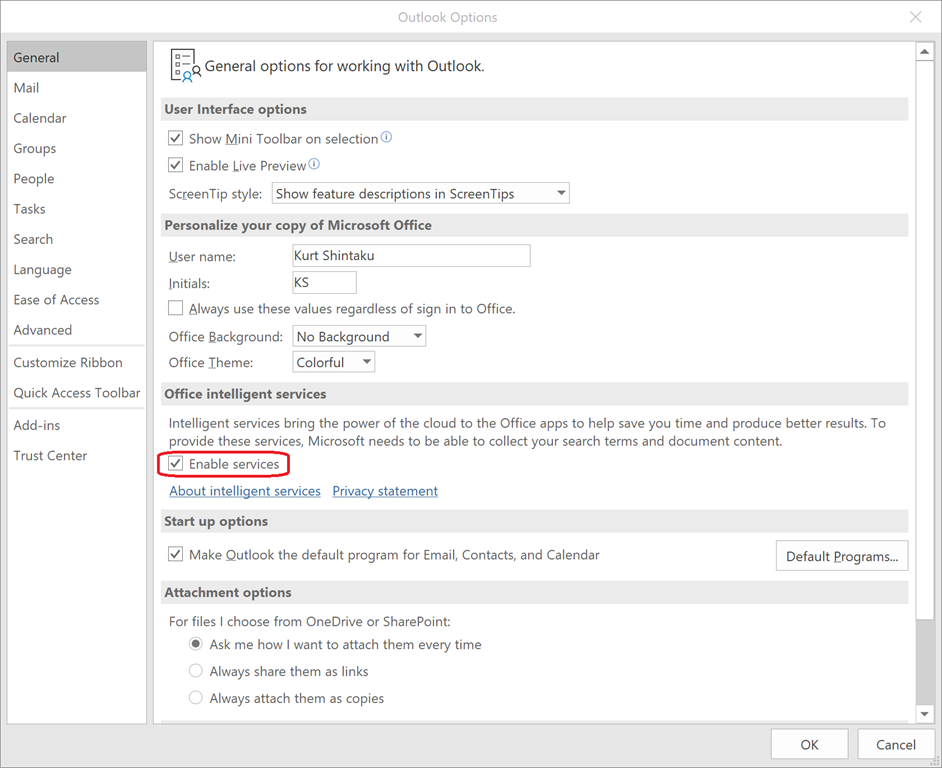
To enable or disable these features go to File > Options and look for Office intelligent services on the General tab.

image

(If you’re concerned about your privacy, read the following: Microsoft Privacy Statement)

Read more:

imageOne of the biggest challenges in digital transformation is ensuring security, privacy, and compliance, especially with the rising number of cybersecurity attacks. Microsoft technology secures your digital transformation with unique intelligence, partnerships and a comprehensive platform for a holistic security strategy.  

In this workshop you will learn:

  • How Microsoft centers its security, compliance, and privacy around identity and access management
  • How to implement and administrate multi-layer threat protection
  • How the Microsoft platform allows security administrators and IT Managers to manage and protect sensitive information with built-in intelligence
  • How to use the vast array of controls to manage a secure, compliant, and privacy sensitive environme

DATE/TIME:
June 7, 2018 — 9:00 AM – 3:30 PM 

LOCATION:
Microsoft Technology Center – Irvine
3 Park Plaza, Suite 1600
Irvine, California 92614

REGISTRATION:
http://boards.microsoft.com/public/item/202477?token=4bd95b09c1

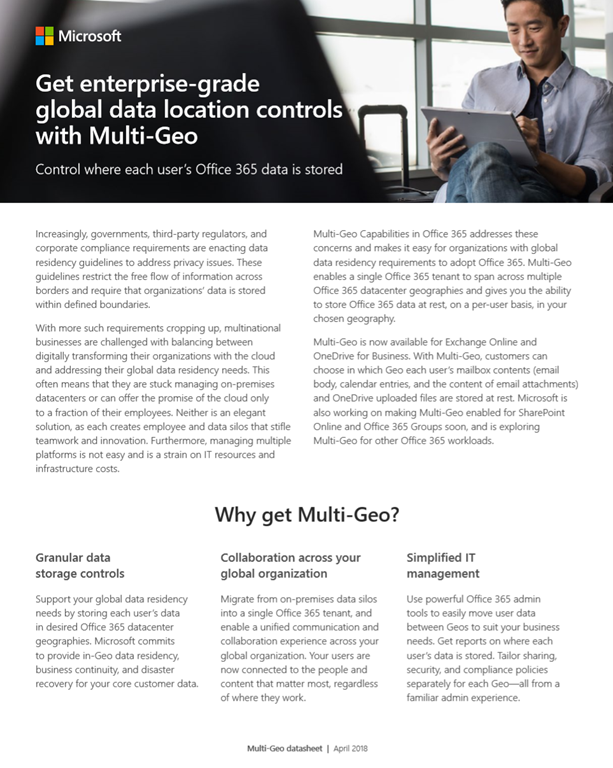
imageOffice 365 Multi-Geo Data Location provides enterprise-grade global data location controls, allowing administrators to control where each user’s Office 365 data is stored.

It enables a single tenant to span multiple geographic locations (Geos). For example, when Multi-Geo is enabled, customers can select the location of Exchange Online mailbox content (data at rest) on a per-user basis.

The service currently supports Exchange Online & OneDrive for Business.  It is an add-on service to select Office 365 subscriptions and costs USD $2/user/month for users in Satellite Geos.

imageWhile it’s clear what the potentials of cloud computing are for your organization, it may be unclear the adjustments your IT organization will need to make in transitioning to the cloud.

This guide is designed to help your IT team more effectively implement and integrate cloud technologies. You’ll explore key cloud concepts as well as Azure-specific tips and tactics around: 

  • General architectures that incorporate security, identity, and cloud design principles.
  • DevOps and how it fits with cloud technologies. 
  • Integrating, planning, and managing cloud resources. 
  • Microsoft Azure governance.

image

Grab the guide here:

imageIf you are a .NET developer or architect who wants to get started with Microsoft Azure, this book is for you!

Written by developers for developers in the .NET ecosystem, this guide will show you how to get started with Azure and which services you can use to run your .NET applications and store your data in a more efficient and secure way.

Posted by: kurtsh | May 1, 2018

INFO: Deploy Microsoft Teams using MSI Installer

imageBack in March 2018, we released the .MSI package for Microsoft Teams. 

If you’ve been interested in a .MSI deployable/configurable Teams client package (32-bit or 64-bit) to use with your SCCM configuration, this is probably what you want to take a look at.

Posted by: kurtsh | May 1, 2018

RELEASE: Microsoft Forms for Office 365 Commercial

Microsoft Forms is finally generally available for Office 365 Commercial subscriptions!  This means Office 365 F1, E1, E3, & E5 subscribers are all eligible to use the service. (Yes, I’m asking about GovCloud availability – but don’t know the answer yet.)

Today, we are excited to announce that Microsoft Forms, a simple app for creating surveys, quizzes, and polls, is generally available to all Office 365 commercial customers. Used by more than 3 million users in education, Forms was brought to commercial preview by customer demand last year. Thanks to more than 50,000 companies participating in the Preview program, Microsoft Forms is now enterprise ready, and, hence, we are removing the “Preview” label.

With Microsoft Forms, your employees can easily solicit client input, measure customer satisfaction, and organize team events, within minutes. The app is simple to use and works on any web browser, so it can be accessed from anywhere, anytime. With real time responses and automatic charts built in, Microsoft Forms makes it easy to understand the data right away. And for companies that want to custom brand their surveys, Forms supports the addition of themes, logo, and images. We also know that many users work in teams, so users can collaborate on a single form. Forms can be used within applications you know and love, such as Excel, SharePoint, Teams, Flow, and Sway.

Most recently, Microsoft Forms added many features that enterprises requested, such as SOC compliance, ability for IT admins to manage user licenses, and controls to enable sharing of Forms outside of their organization. For more complex surveys, we also added support question branching and Likert scales, plus an ability to collect 50,000 survey responses per form.

« Newer Posts - Older Posts »

Categories