Posted by: kurtsh | December 19, 2019

PREVIEW: New features in Azure Synapse Analytics

imagePreview new features in Azure Synapse Analytics: Accelerate your analytics journey with a limitless analytics service.

Sign up to:

  • Try out new preview features in Azure Synapse Analytics
  • Test preview features in a production environment.
  • Provide feedback directly to the Azure Synapse Analytics engineering team.

Features of interest include:

  • SQL analytics (on-demand & provisioned compute)
  • Apache Spark integration (big data processing)
  • Data Ingestion
  • Synapse studio (unified experience)

Tell us a little about yourself and your analytics interests. If you’re selected to participate in the preview, we’ll contact you about next steps.

To learn more about Azure Synapse Analytics, sign up for the virtual event, Accelerate Time-to-Insight with Azure Synapse Analytics. Watch a hands-on demo and participate in a live Q&A with Azure engineering and analytics experts.

Posted by: kurtsh | December 13, 2019

INFO: Microsoft Intune & Cloud Storage “costs”

imageEver wonder how much cloud storage space costs for Microsoft Intune software distribution?

The short answer is:

  1. There’s no limit on the amount of storage; storage comes with the purchase of a Microsoft Intune license.
  2. There is a 8GB maximum file size limit on any individual desktop file uploaded.

Taken from the Microsoft Intune documentation:

All apps that you create by using the software installer installation type (for example, a line-of-business app) are packaged and uploaded to Intune cloud storage. A trial subscription of Intune includes 2 gigabytes (GB) of cloud-based storage that is used to store managed apps and updates. A full subscription does not limit the total amount of storage space.

For more information, read the following:

Posted by: kurtsh | December 12, 2019

DOWNLOAD: Microsoft 365 E3 & E5 licensing diagrams

imageOne of our Modern Workplace Specialists put the following diagrams together illustrating what suite each Microsoft 365 entitlement comes from and I thought it was worthwhile to share:

The first file is a hyperlinked PDF that shows all the components of:

  • Office 365 E3 & E5
  • Enterprise Mobility & Security E3 & E5
  • Windows 10 E3 & E5

The second document is a PowerPoint that has the same content but editable.

Download the files here:

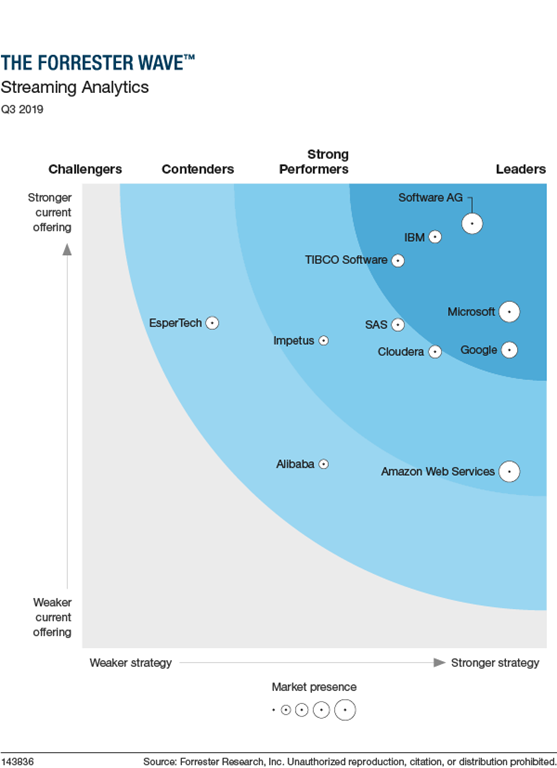
imageDiscover why Forrester has recognized Microsoft as a Leader in enterprise business intelligence (BI) platforms.

In this report, you’ll get expert guidance in evaluating vendor-managed BI platforms and a detailed analysis of the strengths and weaknesses of each vendor. Learn how Microsoft stacks up and explore the differentiated features in the current enterprise BI market:

  • Augmented BI, such as machine learning and natural language querying.
  • Platform extensibility and customization capabilities.
  • Features necessary to work with big data.
  • Built-in data preparation tools.
  • Deployment options, including cloud, on-premises, and mobile.

Get the report here:

https://info.microsoft.com/ww-landing-Forrester-Wave-Enterprise-BI-platforms-website.html?LCID=EN-US

Posted by: kurtsh | December 12, 2019

PREVIEW: Microsoft Teams is now available on Linux

imageStarting today, Microsoft Teams is available for Linux users in public preview, enabling high quality collaboration experiences for the open source community at work and in educational institutions. Users can download the native Linux packages in .deb and .rpm formats here. We are constantly improving based on community feedback, so please download and submit feedback based on your experience.

The Microsoft Teams client is the first Microsoft 365 app that is coming to Linux desktops, and will support all of Teams’ core capabilities. Teams is the hub for teamwork that brings together chat, video meetings, calling, and collaboration on Office 365 documents and business processes within a single, integrated experience.

For more on the Preview announcement, visit:

Posted by: kurtsh | December 12, 2019

HOWTO: License Extended Support Updates for Windows Server

imageRecently, I was asked how it was that Extended Support Updates (ESU)were licensed.  This is answered in the FAQ for ESU.

Can customers license just the virtual machine? For example, if a customer is running a Windows Server 2008 or 2008 R2 virtual machine on Windows Server 2012 or another host, do they need Extended Security Updates for the full server? What if the host is running Windows Server 2008 or 2008 R2, but none of the virtual machines are?

Customers cannot license individual Windows Server virtual machines. They must license the full physical server. Licensing requirements for Extended Security Updates on-premises align to the licensing requirements for the underlying Software Assurance coverage or subscription. Customers will only need to know their Windows Server license position for a given server, to know how many Extended Security Update licenses they need.

Customers who have covered all the underlying cores of the physical server with Windows Server Datacenter licenses should buy Extended Security Updates for the number of physical cores, irrespective of the number of VMs running on that physical server.

Customers who have covered all the underlying cores of the physical server with Windows Server Standard licenses should buy Extended Security Updates for the number of physical cores, but will only be licensed to run and update two virtual machines on the server. Customers who wish to run and update more than two virtual machines on a server licensed with Windows Server Standard must re-license all of the physical cores on the server with both Windows Server Standard and Extended Security Updates for each additional pair of virtual machines.

For more details on this, please read the FAQ:

    imageExtended Security Updates are purchasable for Windows 7, Windows Server 2008 and Windows Server 2008 R2.  If you need them on systems before the January 14, 2020 end of life date, read the information below:

    Additional resources:

    Test your systems for security updates once ESU licenses have been purchased:

    imageEvery so often this question comes along:

    • “We need to install Office on a server to allow a server-side application to process Office documents."
    • “We want to install Word on our server to take .DOC files and export them to Adobe Acrobat .PDF".”
    • “Can we install Excel on a server to run macros to automate work on a server?”
    • “We have a server-based application that requires the installation of Office to use the Office libraries. How do we install it?”

    FYI using Office on servers is discouraged because the product isn’t designed for server-side processing with multiple CPUs & multiple simultaneous users / threads nor is it designed for secure, unattended operation.

    From our documentation:

    Microsoft does not currently recommend, and does not support, Automation of Microsoft Office applications from any unattended, non-interactive client application or component (including ASP, ASP.NET, DCOM, and NT Services), because Office may exhibit unstable behavior and/or deadlock when Office is run in this environment.

    If you are building a solution that runs in a server-side context, you should try to use components that have been made safe for unattended execution. Or, you should try to find alternatives that allow at least part of the code to run client-side. If you use an Office application from a server-side solution, the application will lack many of the necessary capabilities to run successfully. Additionally, you will be taking risks with the stability of your overall solution.

    Licensing Office for server-side use is also different. 

    Current licensing guidelines prevent Office applications from being used on a server to service client requests, unless those clients themselves have licensed copies of Office. Using server-side Automation to provide Office functionality to unlicensed workstations is not covered by the End User License Agreement (EULA).

    Details of the operational & licensing considerations are located here:

    imageEverything you need to get started building responsive, mission-critical apps is contained within the Guide to NoSQL with Azure Cosmos DB: Create Scalable and Globally Distributed Web Applications. Learn how to use multimodel NoSQL database capabilities in the cloud, build your app, and then take it global. Find Azure Cosmos DB tutorials and practical examples, plus tips and tricks for getting the most out of Azure, including how to:

    • Build, deploy, and manage highly responsive, mission-critical apps.
    • Use distributed databases to scale globally and enable low latency.
    • Set up multiple data models and popular APIs for accessing and querying data.
    • Implement comprehensive service-level agreements for throughput, latency, consistency, and availability.
    • Take advantage of data security best practices to detect, prevent, and respond to database breaches. 

    Download the ebook here:

    imageWe are excited to announce that Microsoft Defender Advanced Threat Protection (ATP) endpoint and detection response (EDR) capabilities for macOS devices are now generally available. We are extending Microsoft Defender ATP capabilities into non-Windows platforms in line with our commitment to build security solutions not just for Microsoft, but also from Microsoft. Customers can expect the same familiar investigation experience, the same solid backend, and the same consistent progression of features coupled with excellent performance that have historically been Microsoft Defender ATP’s signature.

    Microsoft Defender ATP for Mac was designed and is continuously enhanced in collaboration with our customers. Getting customer feedback in our development process is critical to ensuring we create products our customers love. Our design partners, who influence our priorities, asked for competitive detection coverage with a unified investigation experience under strict performance requirements. With that in mind, the Microsoft Defender ATP team is now delivering core EDR functionality for macOS.

    Read more at the announcement post here:

    « Newer Posts - Older Posts »

    Categories