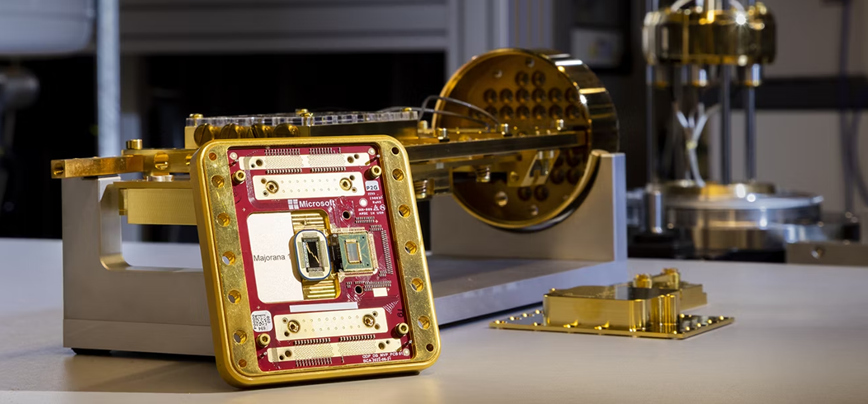
Microsoft’s new revolutionary quantum computing technology delivers massive scale – far exceeding that of any other quantum solution today.
Microsoft’s new “Majorana 1” quantum computing chip is poised to transform the quantum computing industry as the world’s first Quantum Processing Unit (QPU). (p.s. Majorana is pronounced “my-yor-rana”)
Some notes:
- Uses a breakthrough “topoconductor” that scales to a never-before-seen 1 million qubits on a chip
- Leverages “topological superconductivity” – a new state of matter – previously only theorized, using indium arsenide & aluminum
- Selected for Defense Advanced Research Projects Agency (DARPA) Underexplored Systems for Utility-Scale Quantum Computing (US2QC) program
VIDEOS:
Watch Microsoft Technical Fellow, Krysta Svore, VP Advanced Quantum Development explain what this breakthrough advancement means for Microsoft customers:
The following videos are also available at Microsoft’s Azure Quantum news site:
- Introducing Majorana 1
- Majorana 1 Explained: The Path to a Million Qubits featuring Quantum Researcher & Microsoft Technical Fellow, Vice President Dr. Krysta Svore & Microsoft Technical Fellow, Corporate Vice President of Quantum Research, Dr. Matthias Troyer
- A conversation with Microsoft Director of Communications Frank X. Shaw & Microsoft Technical Fellow & head of Microsoft’s Quantum Research facilities, “Station Q”, Dr. Chetan Nayak
- Render of Majorana 1: Microsoft’s Quantum Processing Unit (QPU)
MICROSOFT’S QUANTUM INVESTMENT:
This augments Microsoft decade’s long investment in quantum technology & elevates its quantum offerings: (See What is Azure Quantum?)
- Azure Quantum Workspace
An environment for running & managing quantum programs on real quantum hardware of their choice & monitoring quantum jobs. Provides customers with $500 of free Azure Quantum credits for each quantum hardware provider. - Quantum Development Kit
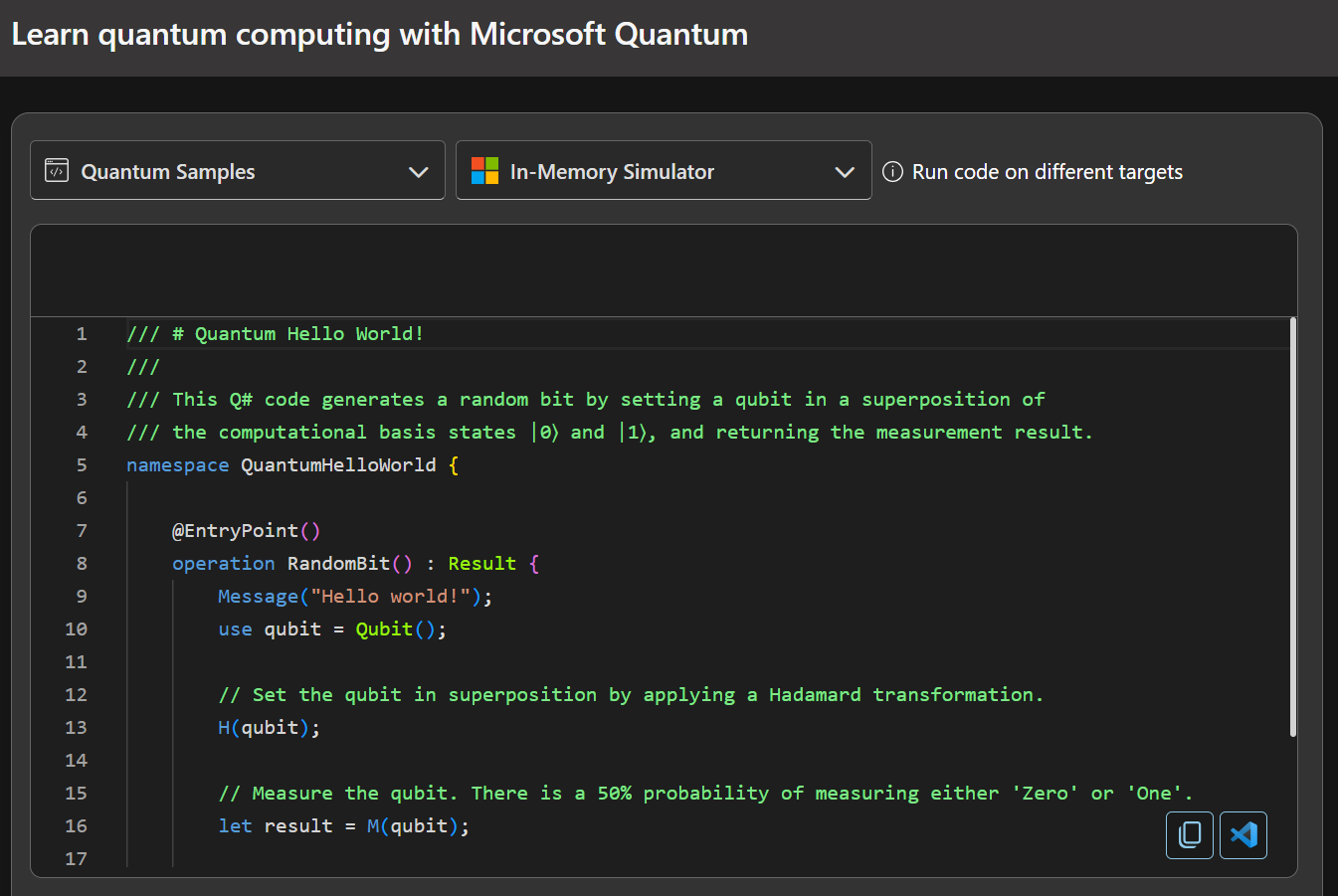
A free tool in Visual Studio Code that empowers developers to write quantum programs in Q#, Qiskit & Cirq, making it versatile for developers working with different quantum programming languages. - Azure Quantum Elements
Accelerates scientific discovery by providing simulation workflows optimized for Azure High-Performance Computing (HPC) clusters, AI-accelerated computing, and integration with quantum tools. It enables researchers to simulate quantum mechanical systems, such as molecules, and experiment with existing quantum hardware. - Azure Quantum Partners
Microsoft already makes available quantum hardware from other providers to offer diverse quantum resources, including:- IONQ: Trapped-ion quantum computers with up to 11 fully connected qubits
- PASQAL: Neutral atom-based quantum processors with long coherence times
- Quantinuum: Trapped-ion systems with high-fidelity qubits and low error rates
- Rigetti: Superconducting qubit-based quantum processors with fast gate times
- …and more.
Read more about Microsoft’s announcement here:
- Microsoft unveils Majorana 1, the world’s first quantum processor powered by topological qubits – Microsoft Azure Quantum blog
- Microsoft’s Majorana 1 chip carves new path for quantum computing – Microsoft AI News
- Microsoft debuts new superconductor chip designed for Quantum computing – NextGov
- DARPA taps Microsoft, PsiQuantum for scalable quantum computer research – NextGov
- Microsoft quantum breakthrough promises to usher in the next era of computing in ‘years, not decades’ – GeekWire
To get started using Azure Quantum:
- Visit the Azure Quantum website
- Install the Quantum Development Kit for Visual Studio Code
- Create an Azure Quantum workspace through the Azure portal.
- The Azure Quantum website offers resources such as code samples, blogs, articles, and videos to help users learn and explore quantum computing.
 kurtsh
 Kurt Shintaku's Blog
You must be logged in to post a comment.