Microsoft has published a tremendous about of information – documents, videos, podcasts, books, case studies & tools – about:
- how we believe AI should be used
- how we communicate this to our employees
- what we do in practice to adhere to our principles around responsible AI use
- how other organizations can benefit from this work & research
Microsoft’s public position on how AI should be used:
We are committed to the advancement of AI driven by ethical principles. Read the latest on AI policy, research, and engineering.
 Microsoft Responsible AI
- Tools for organizations to support & drive Responsible AI
- Human-AI Experience (HAX) Workbook: Help your organization define and implement best practices for human-AI interaction.
- AI Fairness Checklist: Help your AI practitioners prioritize fairness as they develop AI systems.
- Responsible AI Impact Assessment Checklist:
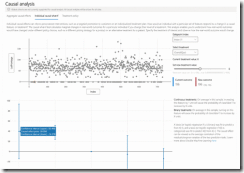
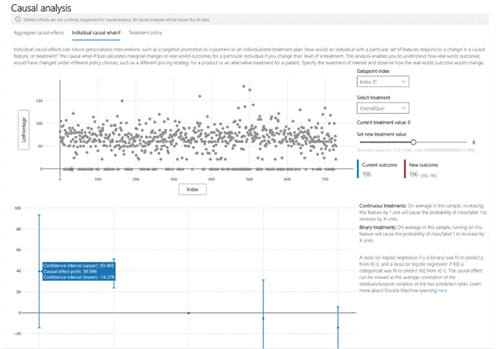
- Responsible AI Dashboard: Access a suite of tools to help you create a customized, end-to-end responsible AI experience.
Microsoft guidance for our employees on how to use AI:  Explore Microsoft’s own internal guidance on how to design, build, and test AI systems in The Microsoft Responsible AI Standard (v2), a 27 page document that goes over the goals of accountability, transparency, fairness, reliability & safety, privacy & security and inclusiveness.
- The Microsoft Responsible AI Standard (v2),
https://query.prod.cms.rt.microsoft.com/cms/api/am/binary/RE5cmFl
(Additionally, we have published an addendum “reference guide” for our “Responsible AI Standard” for customers to review, transparently showing where we originated this principles from including researchers, ethicists, & others: Microsoft Responsible AI Standard Reference Guide)
Microsoft’s guidance on how government institutions should govern AI: 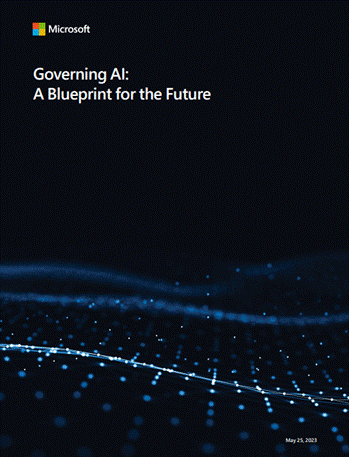 Microsoft’s report “Governing AI: A Blueprint for the Future” is a 42 page report begins with the legal & regulatory blueprint that Microsoft believes government institutions should adhere to. The first part of the report details five ways governments should consider policies, laws, and regulations around AI. The second part focuses on Microsoft’s internal commitment to ethical AI, showing how the company is both operationalizing and building a culture of responsible AI.
(Additionally, for those looking for a summary, a post about the forward of this report is available at How do we best govern AI? – Microsoft On the Issues)
 kurtsh
 Kurt Shintaku's Blog